
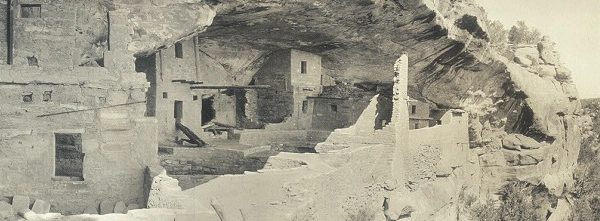
Photo above: Wright Brothers airplane 1903. Right: Mesa Verde Cliff Dwelling. Photos courtesy Library of Congress.
Click here to Sponsor the page and how to reserve your ad.
-
Timeline
-
More
-
More
-
More
-
More
-
More
-
More
-
More
-
More
-
More
-
More
-
More
-
More
-
More
-
More
-
More
-
More
-
More
-
More
-
More
-
More
-
More
-
More
-
More
-
More
-
More
1900
March 14, 1900 - The Gold Standard Act is ratified, placing the United States currency on the gold standard.
Minute Walk in History - Paris World's Fair 1900
It was a world's fair, or international expo, that was meant to define the end of a century and the beginning of the next. Take a stroll back to the year 1900 past an Eiffel Tower plus the exhibiting nations, and their colonies, who showed their technology and wares on both sides of the Seine. And there was an Olympic Games held along with it, too. With video from Thomas Edison.
April 15, 1900 - One of the largest world's fairs in history opens to the public in Paris, France with the United States among 42 nations and 25 colonies to exhibit. This world's fair also included the second modern Olympic Games held within its 553 acre site and would draw over thirty-nine million paid visitors through its close on November 12.
April 15, 1900 - One of the largest world's fairs in history opens to the public in Paris, France with the United States among 42 nations and 25 colonies to exhibit. This world's fair also included the second modern Olympic Games held within its 553 acre site and would draw over thirty-nine million paid visitors through its close on November 12.
June 1, 1900 - The 1900 census is conducted. In the first census of the 20th century, the population of the United States rose to 76,212,168, a 21% increase since 1890. For the first time, all fifty entities that would become the fifty states are included after Hawaii had officially become a territory of the United States on February 22. The center of the United States population, geographically, is now six miles southeast of Columbus, Indiana.
June 5, 1900 - Carrie Nation continues her Temperance Movement to abolish the consumption of liquor when she begins a campaign, prompted by a dream, to demolish saloons, over two dozen, in Kansas and other midwest states over the next ten years.
September 8, 1900 - The Galveston, Texas hurricane, with winds of 135 miles an hour, kills 8,000 people. It remains the most deadly natural disaster in American history. It was not named, during that era, and would have been a Category 4 storm on the Saffir-Simpson scale today.
November 6, 1900 - President William McKinley wins his second term as president, this time with Theodore Roosevelt in the second spot on the ticket, again defeating William J. Bryan by an Electoral Margin of 292 to 155.
Baseball's Best Book
Great Gift for the Baseball Fan

Check out this comprehensive guide to the best players, pitchers, and fielders in baseball history at the 150th Anniversary of the Major Leagues (1871-2020). Now available in paperback and ebook from Amazon and other major retailers.
1901
January 10, 1901 - The first major oil discovery in Texas occurs near Spindletop in Beaumont.
January 28, 1901 - The American League of Major League Baseball declares itself a Major League after one season as a minor league stemming from the minor Western League in 1899. The eight charter teams included the Baltimore Orioles, the Boston Americans, Chicago White Sox, Cleveland Blues, Detroit Tigers, Milwaukee Brewers, Philadelphia Athletics, and the Washington Senators. 1901 signified its initial year of competition as a major league, competing against the senior National circuit.
March 2, 1901 - The Platt amendment is passed by the United States Congress, which limited the autonomy of Cuba as a condition for American troop withdrawal. Cuba would become a U.S. protectorate on June 12.
May 1, 1901 - The Pan-American Exposition opens in Buffalo, New York with nineteen international participants on 342 acres. It would close November 2, 1901 with a disappointing attendance of just over 5 million paid visitors, harmed by the tragedy of September 6.
Minute Walk in History - Pan American Expo 1901
Stroll along the promenade, watch a boat ride through the exposition, listen to the Buffalo March as well as newspaper reports of Opening Day, Closing Day, and the unfortunate shooting of President William McKinley. Video footage from the archives of Thomas Edison.
September 6, 1901 - President William H. McKinley is shot at the
Pan-American Exposition in Buffalo, New York while shaking
hands with fair visitors, following his speech at the event on
President's Day the day before. Anarchist Leon Czolgosz is
arrested for the crime. On September 14, Vice President
Theodore Roosevelt is inaugurated as President upon the death
of William McKinley from gunshot wounds sustained the week
earlier.
1902
January 1, 1902 - The first Rose Bowl is held, pitting the college football squads of the University of Michigan and Stanford. Michigan won the initial contest 49-0. It would be fourteen years until the second game, in 1916, when Washington State defeated Brown.
January 28, 1902 - A ten million dollar gift from Andrew Carnegie leads to the formation of the Carnegie Institution in Washington, D.C.
April 2, 1902 - The first movie theatre in the United States opens in Los Angeles, California. It was known as the Electric Theatre.
May 20, 1902 - The island of Cuba gains independence from the United States.
July 17, 1902 - Willis Haviland Carrier, a native of Angola, New York, invents the air conditioner. He would patent the device on January 2, 1906 and his company would air condition such buildings as Madison Square Garden, The U.S. Senate, and House of Representatives.
1903
January 18, 1903 - The first two-way wireless communication
between Europe and the United States is accomplished by
Guglielmo Marconi when he transmits a message from President
Theodore Roosevelt to the King of England from a telegraph
station in South Wellfleet, Massachusetts.
May 23, 1903 - The first direct primary system in the United
States is begun in the state of Wisconsin.
July 26, 1903 - The first cross-country automobile trip in the
United States is completed with arrival in New York. The trip had begun in San Francisco on May 23.
October 1, 1903 - The first modern World Series of Major League Baseball is held between the American and National Leagues after two years of bitter rivalry. It pitted the pennant winners of that year in a nine game series, with the American League winner, the Boston Americans, coming out on top 5-3 in eight games over the Pittsburgh Pirates.
November, 3, 1903 - With United States support after the Hay-Herran Treaty rejection by Colombia earlier in the year, Panama declares its independence from Colombia. The Panama government is recognized by President Theodore Roosevelt three days later and a canal treaty is signed on November 18, allowing the U.S. led construction of the canal.
December 17, 1903 - Inventors Wilbur and Orville Wright succeed in the first sustained and manned plane flight, taking the heavier-than-air machine through the winds of Kill Devil Hill, North Carolina, and man into an age of flight. The plane, mechanically propelled with a petroleum engine, flew 120 feet in 12 seconds, and later the same day, flew 852 feet in 59 seconds. They would patent the Airplane three years later on May 22, 1906.
1904
April 30, 1904 - The Louisiana Purchase Exposition opens. Renowned for its spectacular ivory buildings, the inventions of the ice cream cone, and the "Meet Me in St. Louis" song. The St. Louis exposition closed December 1 with over nineteen million visitors. It was held on 1,272 acres. The Summer Olympic Games of 1904 were also twinned with the fair and were the first Olympic Games held in the western hemisphere.
May 5, 1904 - Cy Young, of the Boston Americans, pitches the first perfect game against the Philadelphia Athletics in the modern era of Major League baseball.
October 3, 1904 - The Daytona Educational and Industrial Training School for Negro Girls is opened by Mary McLeod Bethune in Daytona, Florida. Bethune is regarded as a leading contributor to the education of African-American students in the early 20th century.
November 8, 1904 - Theodore Roosevelt wins his first election for President after serving three years in the office due to the death of William McKinley. He defeats Democratic candidate Alton B. Parker, 336 to 140 in the Electoral College vote.
November 24, 1904 - The first successful field tractor is invented by American Benjamin Holt, using a caterpillar track to spread the weight in heavy agricultural machinery.
1905
February 23, 1905 - Rotary Club of Businessmen is founded with the first chapter in Chicago, Illinois.
March 4, 1905 - President Theodore Roosevelt is inaugurated for
his second term.
April 6, 1905 - In the ruling of Lochner vs. New York, the ten hour work day law and sixty hour work week law for bakers is
overturned by the U.S. Supreme Court. Work rule laws are
routinely overturned until the West Coast Hotel Company vs.
Parrish case in 1937.
May 15, 1905 - The city of Las Vegas, Nevada is formed with the
sale of one hundred and ten acres in the downtown area.
June 1, 1905 - The Lewis and Clark Centennial Exposition is
opened in Portland, Oregon. The world's fair would host eighteen
nations and three colonies, and close on October 15 with
attendance of 1.7 million visiting its 402 acre site.
1906
April 18-19, 1906 - The San Francisco earthquake occurs,
estimated at 7.8 on the Richter scale. Its proximity to the
epicenter of the San Andreas Fault and the subsequent fire that
followed the quake and aftershocks left 478 reported deaths,
although estimates in the future peg that figure at nearly 3,000. Between $350-$400 million in damages were sustained. Refugee camps were constructed at twenty-one sites throughout the city, including the Presidio, Fort Point, and Golden Gate Park.
March 31, 1906 - The Intercollegiate Athletic Association of the
United States is formed to set rules for amateur sports in the
United States at the urging of President Theodore Roosevelt. It
would become the National Collegiate Athletic Association in
1910.
June 8, 1906 - President Theodore Roosevelt grants protection to Indian ruins and authorizes presidents to designate lands with historic and scientific features as national monuments. This act, now known as the Antiquities Act, which would be utilized by Roosevelt to expand the National Parks system over his term was utilized for the first time on September 24, 1906 with the proclamation of Devils Tower National Monument in Wyoming, an 865 foot volcanic column. On June 29, legislation by Congress would continue to expand the national park system when it establishes Mesa Verde National Park in Colorado, preserving the most notable prehistoric cliff dwellings in the United States of America.
June 30, 1906 - The Pure Food and Drug Act and the Meat Inspection Act is passed.
November 9, 1906 - The first official trip abroad by a United States president occurs when Theodore Roosevelt leaves for a trip to inspect the progress in the construction of the Panama Canal.
1907
January 23, 1907 - The first Native American Senator, Charles Curtis, from Kansas, is elected to office.
March 13, 1907 - Another financial crises occurs in the business community with the beginning of the Financial Panic and Depression of 1907.
September 7, 1907 - The RMS Lusitania, the largest ship at the time, is launched on its maiden voyage from London to New York. The ship would be sunk by a German U-boat in 1915 during World War I, costing 1,198 people their lives.
November 16, 1907 - The Oklahoma Territory and the Indian Territory are combined to form Oklahoma and are admitted into the Union as the 46th state.
December 16, 1907 - The United States Great White Fleet of sixteen battleships and twelve thousand men begin their first round the world cruise.
1908
January 1, 1908 - The tradition of dropping a ball in New York's Times Square to signal the beginning of the New Year is
inaugurated.
January 9, 1908 - Muir Woods National Monument, named after conservationist John Muir, is added to the National Park System by a proclamation of President Theodore Roosevelt after the two hundred and ninety-five acres of coastal redwood forest is donated by William Kent. On January 11, Roosevelt would add
the Grand Canyon Monument to the system. On January 16, 1908, President Theodore Roosevelt proclaimed the Pinnacle National Forest of rock formations and caves as Pinnacles National Monument. On February 7, 1908, he would continue the expansion of federally protected lands with Jewel Cave National Monument in southwest South Dakota.
May 14, 1908 - Technology moves forward as the first passenger flight on a plane occurs when Wilbur Wright escorts Charles W. Furnas in the Wright Flyer III at Huffman Prairie Flying Field in Dayton, Ohio. On September 27, the first production Model T is built at the Ford plant in Detroit, Michigan.
October 9, 1908 - The U.S. Bureau of Public Roads completes an initial two mile macadam surface through Cumberland Gap with the Object Lesson Road, one of the first efforts to test a hardened road.
November 3, 1908 - William Howard Taft is elected President, 321 to 162 Electoral Votes, over Democratic candidate William Jennings Bryan, who had twice before been defeated for the office by William McKinley in 1896 and 1900.
1909
January 28, 1909 - The troops of the United States leave Cuba for the first time since the beginning of the Spanish-American War.
April 6, 1909 - Admiral Robert E. Peary, a Pennsylvania native,
accompanied by four eskimos and a black man, Matthew
Henson, arrives as the North Pole on their sixth attempt,
establishing Camp Jesup. He had set sail for the pole nearly one
year earlier on July 6, 1908.
May 31, 1909 - The National Conference of the Negro is
conducted, leading to the formation of the National Association
for the Advancement of Colored People, (NAACP).
June 1, 1909 - The Alaska-Yukon Pacific Exposition opens in Seattle, Washington. Attendance of 3,740,561, including free visitors, witness the world's fair held on 250 acres, including land of present-day Washington University.
July 12, 1909 - President William Howard Taft continues the designation of national monuments begun during the Roosevelt administration with the proclamation of Oregon Caves National Monument in southwest Oregon. On July 31, he continued the designations with the southwestern Utah lands known as Mukuntuweap that would become, ten years later, Zion National Park.
History Photo Bomb

Washington policy leads to construction by Panama Canal workers, circa 1906. Courtesy Library of Congress.

Ford auto plant. Courtesy Library of Congress.
New ABH Book
Chronology

Check out Chronology, A Collection of 50 Short Essays Within the Timeline of American History.
ABH Travel Tip
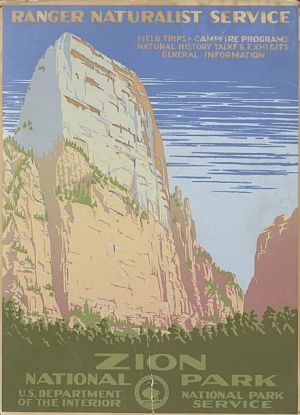
The lands designated during the Roosevelt administration include some of the best examples of natural phenomena in the U.S.A. Plan to take in a few during your next road trip.
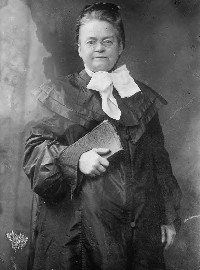
Prohibitionist Carrie Nation. Courtesy Library of Congress.
Official Souvenirs
America's Best History

Get history and national park souvenir t-shirts, mugs, stickers, posters, and other gifts from the official gear of America's Best History, now available on Zazzle, Cafepress, Amazon, and Redbubble.

World's Fair History, 1900's
Buffalo 1901
Charleston 1901-2
St. Louis 1904
Portland 1905
Jamestown 1907
Seattle 1909
For the history of baseball, check out our friends at Stat
Geek Baseball with unique stats from 1871 to today you can get nowhere else.
Timeline Book

Now in easy to search ebook, pdf, or paperback.