-
Charleston
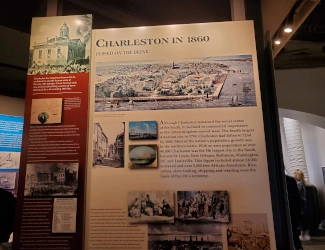
Fort Sumter Visitor Center Exhibit on Charleston History. Photo courtesy America's Best History.
Associate Pages
-
Visitor Statistics
7.89 million visitors (2024)
Charleston
Size
1.2 square miles
157,665 city population; 849,417 metro.
Fees
There are a variety of fees association with the attractions of Charleston. Its most famous historic site, Fort Sumter, costs around $40 to take the ferry ride to the site with interpretation (see Fort Sumter site for details), and various museums have their own fees, such as City Hall, the Old Slave Mart Museum, and the Provost Marshall House and Dungeon. Of course, to walk around the city is free. Parking, in parking garages, which are plentiful, and many parking meters is $3 per hour. Guided walking tours and horse carriage tours extra.
Fees subject to change without notice.
Weather
Hot and humid in summer with thunderstorms and brief showers not uncommon. Spring and fall are temperate with winter cool and damp. There can be winter days of freezing temps.

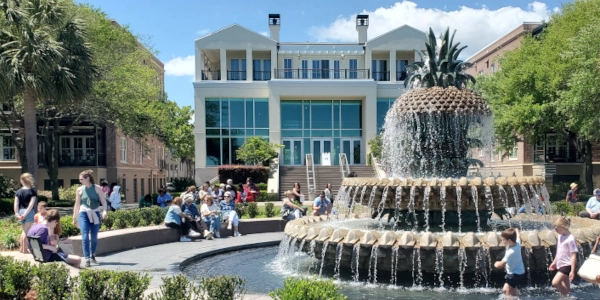
Lithograph of Fort Sumter. Image courtesy Library of Congress. Right: Fountain in Waterfront Park. Courtesy America's Best History.
Charleston
Charming Charleston describes the harbor and city today, with flowers and harbors and walkways where people actually dress up to go out and take a walk. There's also free shuttle buses that take you from one side of town to the other. But for us, there's nothing like taking a stroll through palms, water, and flowers. Blonde and brunette southern women saunter between the bars, restaurants, markets, and historic sites in sundresses with Easter hats and cowboy boots; horse drawn carriages ply the streets with tourists and wedding parties; and men, us dumb but easily amused subset, just watch and stare. Of course, we know Charleston has its dark antebellum past, from slavery to the Civil War to Jim Crow, but today it is a vacation paradise to learn from such things, while viewing a heritage that still retains the quaint antebellum kindness that deep southern cities often impart. And Charleston is one of those best.
Click here to Sponsor the page and how to reserve your ad.
Charleston Then
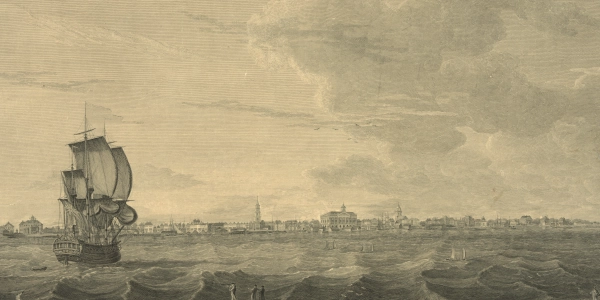
When you speak of Charleston in the past, one has to realize that it was long before the Civil War and its strife that Charleston got its start. Founded in 1670 after a rough voyage from England begun one year earlier by three ships full of English colonists, Carolina, Port Royal, and Albermarlet, the voyage led by Captain Joseph West and Sir John Yeamans became separated. Only a sloop and the Carolina would make it eventually with one hundred and fifty settlers and slaves, in March 1670, surprisingly losing only two people on the voyage. Promised to the voyagers; free men four hundred acres; indentured men two years of service, then one hundred acres increased to one hundred and seventy if they imported a slave; slaves, nothing.
Originally the settlement was located on Albermarle Point, a suggestion that the friendly Kiawah Indians noted as better protected and good for farming, however, the whole town moved to its present location, Oyster Point, ten years after founding. From that point, Charles Town, as known as then due to the King, grew. The population was one thousand by 1680. A wall was built to protect the city over the next decade; it would be torn down by 1718.
By 1740, the city was in an economic boom, with its harbor the best in the colonies, and its seaport exporting indigo and cotton to high profits. It was known as the Little London of the New World. The colony engaged a religious philosophy of tolerance and freedom, assisting in providing the town with several decades of a Golden Age. However, by the first year of the American Revolution, it was a hotly contested city of loyalists and patriots, and one the British did not want to lose. The Battle of Sullivan's Island in June 1776, the second major conflict of the Revolution in the south, saw Colonel Moultrie's palmetto fort withstand the two hundred and seventy guns of the British fleet, though the town would fall later in the war.
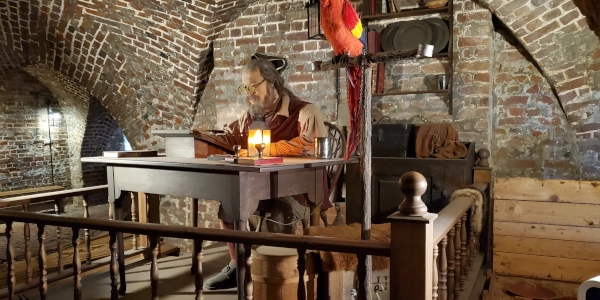
Image above: Vintage view of Charles Town from harbor, unknown date or author. Courtesy Library of Congress. Photo below: One exhibit on the guided tour inside the Provost Dungeon of the Old Exchange. Courtesy America's Best History.
Charleston Now
Fort Sumter, Fort Moultrie, and long gone Fort Johnson and Battery Wagner, tell the story of secession and war, and today, while marking that past, Charleston represents a port city that has grown into an internationally known tourist destination. Nearly eight million people visit the history and period architecture each year. It remains a city replete with living history, in the walls of its old buildings, and in the spirit of its residents.
Minute Walk in History
Charleston
From a walking tour of the French Quarter to a ferry boat ride to Fort Sumter, follow us on a short video excusion to one of the most charming and historic cities in the United States.
T-Shirts and Souvenirs

Charleston T-Shirts and Souvenirs.
Charleston
Things You Should Not Miss
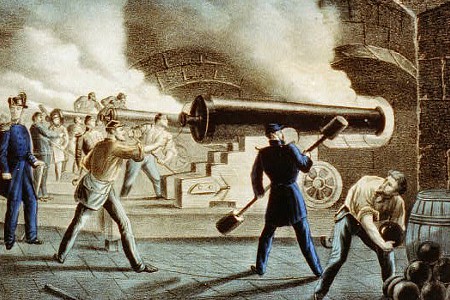
1. This may not be first on your list if you're not an American history fan, but visit both Fort Sumter and Fort Moulrie. They represent not only the first shot of the Civil War, but the end, when Major Robert Anderson returned to Fort Sumter after the war was over and over a million slaves freed, and raised the American thirty-three star flag above the fort again. And you not only get to walk around the fort, but get a thirty minute ferry ride both to and fro.
2. Take in the history of downtown Charleston, including the French Quarter as well as the Battery. Multi-colored houses, exhibits such as The Exhange and Provost Dungeon, The Slave Mart Museum, Waterfront Park, the City Market around since 1806, and a whole lot more. A horse drawn carriage ride or a walking tour would sure add to your visit, depending on your wallet and feet.
3. Stay overnight, or more likely, wonder who can afford it, while walking past the harbor side Cooper Hotel. Presidential suite over $19,000 per night. Regular room around $1,900 a night. Ask yourself, if you had the money or won the lottery, would you pay to stay there. Expect different opinions in your group or family. Alas, I was the only one who wouldn't.
Photo above: Lithograph of cannons firing from Fort Sumter. Courtesy Library of Congress.
Visitor FAQ
What's There Now
Fort Sumter and Fort Moultrie - Fort Sumter National Monument is made up of several sites. The main site, Fort Sumter, is located in Charleston Harbor and must be accessed by ferry. For most people, that means a ferry ride from either Patriots Point in Mt. Pleasant or Liberty Square downtown. There is a Fort Sumter Visitor Center at 340 Concord Street where tickets to the ferry can be bought, although you may want to buy online prior to your wanted time and date to insure that they are not sold out. Usually three ferry rides per day, morning, noon, and afternoon. Fort Moultrie is another unit of Fort Sumter National Monument across Charleston Harbor. It is located on Sullivan's Island. Cost $10.
Patriots Point Maritime Museum, Charleston Harbor, and other Charleston Sites abound, and they include history of the American Revolution, southern slavery, the Civil War, and antebellum charm that still resides in this spectacular city in South Carolina.
The Maritime Museum at Patriots Point, near Fort Moultrie, includes many exhibits on maritime topics, from the USS Yorktown to aircraft from World War II to Desert Storm.
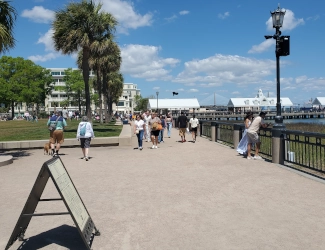
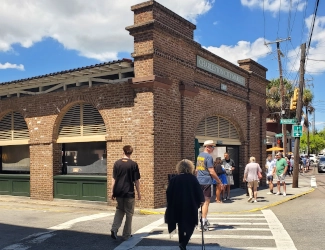
Photo above: View of Waterfront Park in Charleston looking west toward the Cooper Hotel. Courtesy America's Best History. Below: Entrance to the Charleston Market, in old times a market for fruits, vegetables, and meats, stretching five blocks long. Today, it is a craft market stretching five blocks long.
More Charleston Treasures
Charleston is a city full of history and almost old world charm. Your best stop for an overview of the sites is the Charleston Convention and Visitors Center several blocks from the Fort Sumter Visitor Center in the center of the city. From there you can walk, be guided, take a free shuttle, or find out where to hail a horse. Just to list a somewhat comprehensive list of what downtown Charleston has to offer: the Charleston Aquarium, Aiken-Rhett House, International African American Museum, Charleston Museum, Citadel Museum, Dock Street Theater, Edmonston-Alston House, Old Exchange and Provost Dungeon, the Old Slave Mart Museum, the Powder Magainze, St. Patrick's Church and more than one dozen others, plus Rainbow Row.
Lodging and Camping
Charleston - While there is no lodging or camping at Fort Sumter National Monument, Charleston is a city with many lodging opportunities, from bed and breakfasts to standard hotel and motel chains to upscale waterfront hotels such as the Cooper.
Camping can be found north of the city in the expansive Francis Marion National Forest.
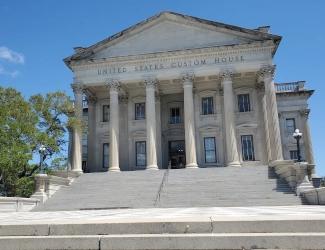
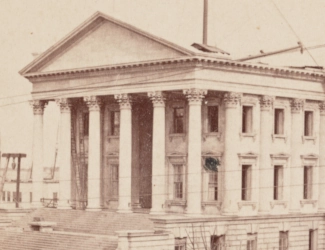
Photo above: Charleston's Customs House today, still a federal building soon to be sold and repurposed. Courtesy America's Best History. Below: U.S. Customs House, under construction, 1860/1870, unknown author. Courtesy Library of Congress.
History Rough and Proper
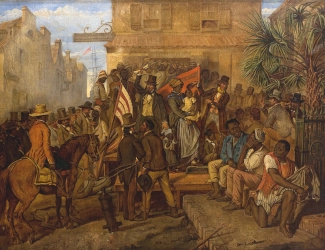
There is no getting around the good and bad, actually horrid, history of South Carolina and Charleston. You can witness it under a tree next to the Exchange and Provost Dungeon building portrayed in the painting above; the location is still there. You witness it in the Slave Mart Museum. South Carolina thought so much of its white self, that they started the secession movement, twice, and a Civil War to keep their lifestyle intact. And what was their lifestyle, ... high class, the fourth largest city in the United States, and the richest.
However, today, one hundred and sixty-five years later and counting, Charleston is a city that shows its colors in the history it reminds us of, plus the charm of a city that retains a different architecture and vibe. It is still a city of proper dress. When you see teens to twenty-somethings dressed great just walking around to the sites and restaurants, and not ripped jean shorts and a t-shirt, you know you are in a unique spot. And Charleston should be visited for all that, for all it represented, overcame, with Union help, and the politeness and bougey manner in which it handles itself today. Don't miss its many sides.
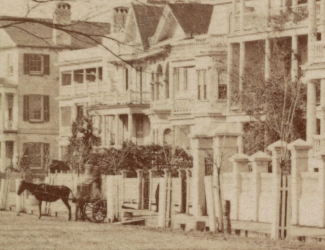
Photo above: Depiction of Slave Auction next to Exchange Building, 1853, by Alonzo White, 1854, Eyre Crowe. Courtesy Wikipedia Commons. Below: Rows of proper houses on South Street Battery, 1860/1900, Unknown Author. Courtesy Library of Congress.

Nearby Attractions
South Carolina Tourism
Charleston Convention and Visitors Bureau