Lowell National Historical Park
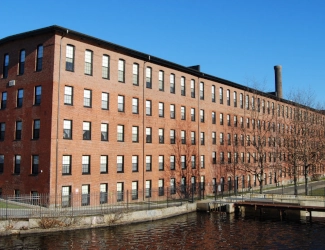
Restored Boott Manufacturing Company Mill at Lowell National Historical Park, 2008, Marc N. Belanger. Courtesy Wikipedia Commons.
Associate Pages
Visitor Statistics
Lowell NHP
102,540 visitors#227 Most Visited National Park Unit
Park Size
31 acres (Federal), 139 acres (Total)Source: NPS 2025 NPU (National Park Unit); NHS (National Historic Site) Rankings among 399 National Park Units.
Park Entrance Fees
Park Visitor Center and Park Itself - FreeBoott Cotton Mills - Adults $6, Youth $3, Under 6 free.
Canal Tours - Adults $12, Youth $8, Under 6 free.
Fees subject to change without notice.
Lowell Weather
Be prepared for anything, it's New England. Generally warm in the summer with cool nights with thunderstorms and humidity in the height of the summer. Cool to cold in winter months.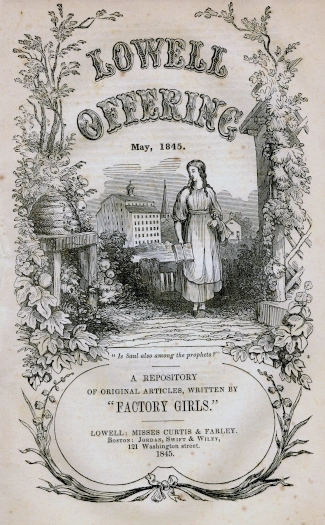
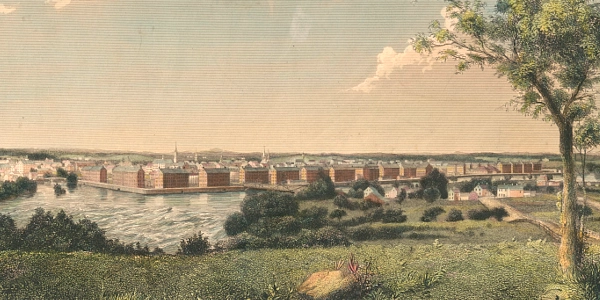
Top: Book of articles by the Lowell Factory Girls, 1845. Courtesy National Park Service. Right: Vintage lithograph of row of textile mills or factories mainly along the Merrimack River, 1840/1860, author unknown. Courtesy Library of Congress.
Lowell National Historical Park
There were rich people in New England at the turn of the century called the Associates and they had lots of cash, but wanted to make more. So they turned their cash into fabric and back to cash. But they needed a location to build the fabric mills and factories somewhat nearby the major city of Boston, and Kirk Boott (Harvard class of 1809), working for the Boston Manufacturing Company was sent to build the Merrimack Manufacting Company in Lowell, then somehow parlayed that into founding and running the town of Lowell itself. It would eventually encompass the Boott Mills in 1835, named after Kirk by its proprietors; Abbott Lawrence, Nathan Appleton, and John Amory Lowell. They and the other mills would employ factory girls on the heavy machine looms that weaved the raw material into cloth. Those women would work fourteen hours per day. Eventually there would be strikes for better working conditions and better pay. A women's suffrage movement was born alongside the labor dispute. However, for well over a century, these mills produced a ton of profits for the Associates and their progeny. Today you can visit this story in many of the original buildings, nine intact from Boott Mills which ceased operating in 1958, take a trolley from one site to the others, and even ride a canal boat down the historic waterways.
Click here to Sponsor the page and how to reserve your ad.
Lowell Then
It was the birth of modern mills, harnessing the power of the Merrimack River to power the copious amount of factories that would dot the new town of Lowell from the 1820's through the late 1950's. Lowell was technically established in 1826, named after Francis Cabot Lowell, but not founded by him. Lowell was the inventor of the system of vertical integration of textile manufacturing called the Waltham-Lowell system, which had been inspired by a trip to London in 1811. Kirk Boot is often credited as the founder of the town. Mill girls would work in the factory, live in dorms, and expected to be educated and attend lectures, such as those by Ralph Waldo Emerson and John Quincy Adams. Three decades after founding, it was the largest industrial complex in the United States. Its labor force would change over time, particulary after Irish immigrants arrived to escape the Irish Famine and were willing to work for lower wages. However, after the Civil War, many textile companies moved south for even cheaper labor. It would reinvent itself through the centuries, restored as a parachute manufacturing center during World War II. After the war, hard times came and stayed. Many of the manufacturing mills ceased operation, and the town of Lowell began restoring them for tourism in the 1970's, leading the the National Historic Park which tells its story now.
"The operatives were well dressed, and we are told, well paid. They are said to be healthy, contented, and happy. This is the fair side of the picture ... There is a dark side, moral as well as physical. Of the common operatives, few, if any, by their wages, acquire a competence ... the great mass wear out their health, spirits, and morals, without becoming one whit better off than when they commenced labor. The bills of mortality in these factory villages are not striking, we admit, for the poor girls when they can toil no longer go home to die. The average life, working life we mean, of the girls that come to Lowell, for instance, from Maine, New Hampshire, and Vermont, we have been assured, is only about three years. What becomes of them then? Few of them ever marry; fewer still ever return to their native places with reputations unimpaired. "She has worked in a Factory," is almost enough to damn to infamy the most worthy and virtuous girl," Orestes Brownson, The Laboring Classes: An Article from the Boston Quarterly Review, Boston: Benjamin H. Greene, 1840. Courtesy Gilder Lehrman Institute of American History.
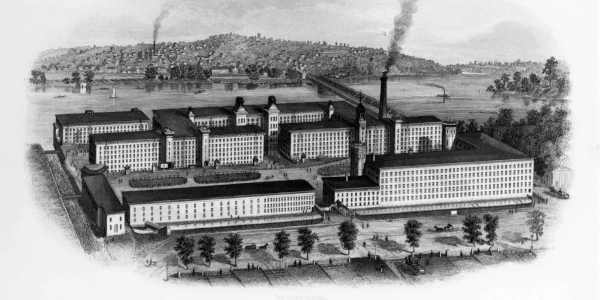
Photo above: Drawing of Boott Mill, Lowell. Courtesy National Park Service. Below: Restored mill in Lowell National Historical Park. Courtesy National Park Service.
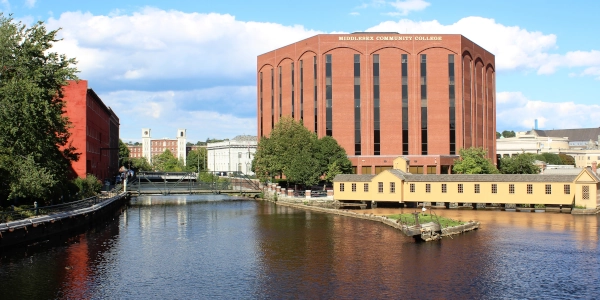
Lowell Now
Although the National Historical Park only encompasses a total of 139 acres, it's really a story about the entire city. There is so much to see. Just to include a few; the Boott Cotton Mills Museum, 1840's Boarding House Museum, Visitor Center, Suffolk Mills Tour, Canal Walkways, Trolley Rides, Canal Tours, plus a River Transformed Walking Tour. Reserving tours in advance is recommended.
Visitor hours change according to the season, but the park is open year round. Today, there are about one hundred and twenty thousand residents of Lowell.
Minute Walk in History
Lowell National Historic Park
At the relatively new Lowell National Historic Park, the history of the industrial revolutions, clothing mills, factory girls, and women's rights now mesh with an interesting experience throughout the town. Hear the stories of past women who worked there and the fun you can have when you visit, i.e. trolley rides, rangers tours, and canal boat rides.
T-Shirts and Souvenirs

Lowell National Historical Park T-Shirts, Sweatshirts, and Gifts.
Lowell NHP
Things You Should Not Miss
1. Take in the film at the Visitor Center, "Lowell, the Continuing Revolution," which gives you a great overview of the history of the factories and town.
2. Visit the Boott Cotton Mills Museum. Exhibits on the loom manufacturing process, plus demonstration, and exhibits on child labor and the mill girls. You might want to wear ear plugs. The looms can be loud. The Suffolk Mill (opened 1831) tour is seventy-five minutes long and starts plus ends at the Boott Museum. This National Park Service tour is given on select days between June and November. You will walk around 1.5 miles.
3. Take a tour of the Morgan Cultural Center, which serves as the town historic center. This recreated boarding house focuses on where the mill girls lived.
4. For more fun that might enamore the non-history members of your clan, consider taking a trolley ride or canal boat ride. There's nothing like moving around history, yet subtle enough not to bore.
Photo above: Vintage photo of Lowell and canal. Courtesy National Park Service.
Visitor FAQ
What's There Now
Park Visitor Center and Buildings
Lowell National Historical Park Visitor Center is located at 246 Market Street, Lowell MA 01852. It provides facilities, tour reservations, exhibits, and the film, "Lowell, the Continuing Revolution." Its hours are different than the park itself, including Saturday and Sunday openings only during some winter months. Check before you go.
Boot Cotton Mills Museum includes eighty-five operating looms plus interactive exhibits and videos about the Industrial Revolution.
The Northern Canal Walkways provides a quiet stroll, just as the gentry of the town did two centuries ago. It is open May 15 to October 15. This path was completed in 1847 along the Merrimack River. Goats are now used to keep vegetation manageable. Don't forget there are more tours available than listed above: Pawtucket Canal Tour and Riverboat Tours. Check the park schedule for when these are available.
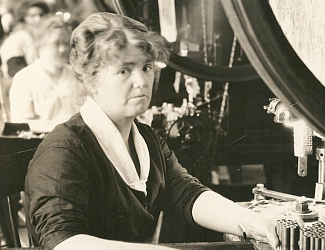
Photo above: Woman seated at a cartridge venting machine at the U.S. Cartridge Co. plant in Lowell, Massachusetts, during World War I, 1914-1918, U.S. Army Signal Corps. Courtesy Library of Congress.
Lodging and Camping
Lodging - The city of Lowell and surrounding towns have plenty of, and a variety of, accomodations. Camping sites in the surrounding area are also available. Food is aplenty in the downtown area and a food festival is held during the last week of July. Cute shops abound.
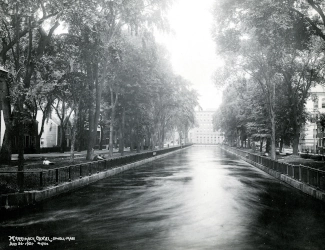
Photo Above: Vintage photo of canal going through one of the mill neighborhoods. Courtesy National Park Service.

Get Baseball History and Books at Stat Geek Baseball, including Baseball's Best.
The Mills of Lowell
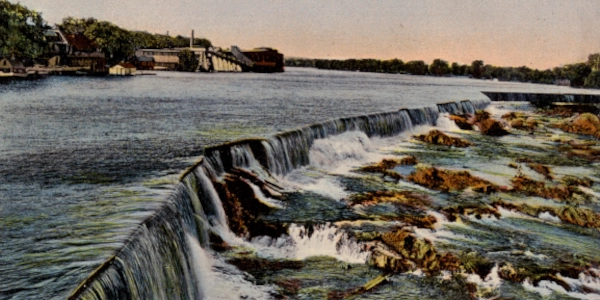
How many mills once graced the streets and canals of Lowell? How did they begin? Francis Cabot Lowell had founded the Boston Manufacturing Company in 1813 along with three of the other Associates. When the Boston Manufacturing Company desired another factory, the Merrimack Manufacturing Company, they decided on creating a mill and town along the Merrimack and Concord Rivers to take advantage of the water power of the Pawtucket Falls. By 1840, there were thirty-two textile factories in town. By 1850, there were forty mills with ten thousand workers on three hundred and twenty-thousand looms. The population continued to explode. 6,474 in 1830; 20,796 by 1840; 33,383 in 1850.
Some of the mills included the Hamilton Mill, Wannalancik Mills (Suffolk Mill), Boott Cotton Mills, Merrimack Manufacturing Company, Appleton Mill, and the Lawrence Mills. The mills were subject to disputes and strikes throughout its heyday, including the 1922 New England Textile Strike.
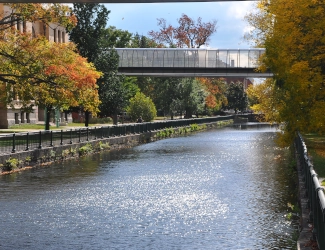
Photo Above: Recent photo of canal going through a similar mill neighborhoods with restored buildings on left. Courtesy National Park Service.