-
Timeline - The 2000s
It began a decade before, although in many ways the intensity of the dynamic was missed, but when the hijacked planes hit the World Trade Center, the Pentagon, and the Shanksville field on September 11, 2001, there was no denying that a new order had emerged. It was a war against our way of life, a war of terror, and our response would dominate the decade and years come.
More 2000s

President Barack Obama. Courtesy Wikipedia Commons.

Photo above: World War II Memorial in Washington, D.C., opened April 29, 2004. Right: Court of Flags at the United Nations, Mateusz Stachowski, SXC Free Images.

Sponsor this page. Your banner or text ad can fill the space above.
Click here to Sponsor the page and how to reserve your ad.
-
Timeline
2005 - Detail
May 31, 2005 - After more than thirty years in suspense, the identity of Deep Throat, the contact for reporters Woodward and Bernstein in the uncovering of the Watergate scandal, is revealed when W. Mark Felt, the second in command at the FBI at the time, confirms that he was their contact.
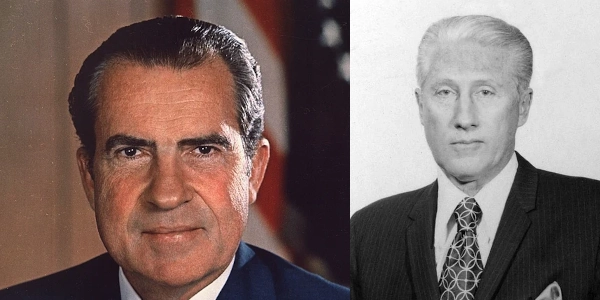
The speculation had been rampant, not only in the halcion days of the break-in at Democratic National Committee headquarters at the Watergate Hotel in Washington, D.C. and the reporting by Washington Post writers Bob Woodward and Carl Berstein, but in the subsequent years since. W. Mark Felt was the second in command official at the F.B.I., who was a loyal patriot albeit with an axe to grind and suspicion of his politicically approved boss. Through the investigation and reporting of the years between 1971 and 1974, Felt continuously stated that he had nothing to do with the leaks. "The Bureau doesn't have any secret files." "I have to do this my way." "I haven't leaked anything to anybody. They are wrong!" were quotes attributed to him during the process.
The speculation never stopped for the thirty-three years prior to his admission. There were secrets and reveals, many unconfirmed, between Felt and his family, and Bob Woodward stopped by to the house in Felt's later years. However, it was not until 2005, that the stolid man who had been at the bureau for thirty years prior to the Watergate affair would make the ultimate admission. "I'm the guy they used to call Deep ThroatI'm the guy they used to call Deep Throat."
So why did Felt feel compelled to spill the beans to two young Washington Post reporters? It is a complicated answer. As noted Felt was a thirty year veteran of the FBI and its deputy director when D. Edgar Hoover died. He thought it would have been natural for President Nixon to elevate him to the top spot. Felt respected Hoover, although he thought he was obsessive. However, Nixon did not like the F.B.I. much at that time, thinking they had leaked some important facts about upcoming arms talks with the Soviet Union. So Nixon went outside the upper echelon of the bureau and choose L. Patrick Gray, a Republican lawyer to take the job on an interim basis, with hopes of making it permanent. Felt still ran day to day operations.
With Nixon uncertain of the efficacy of F.B.I. confidence, the Plumbers were formed with ex C.I.A. agents and tasked with investigating the possible leaks, and other nefarious tasks, including the breakin at the Watergate, which used some Cuban operatives. Former C.I.A. Officer E. Howard Hunt and G. Gordon Liddy were experienced Plumbers, breaking into the office of the psychiatrist of military analyst Daniel Ellsburg in September 1971; they found no dirt. At the Watergate, they were given a second chance, but their five man crew was caught at D.N.C. headquarters on June 17, 1972, attempting to fix a bug. Felt and the F.B.I. were eventually tasked with investigating the Watergate event, but were stonewalled at many turns, including the obstinate John Dean, as well as L. Patrick Gray, who would give the White House a heads up. The White House wanted the investigation to focus solely on the five burglars plus Gordon Liddy and E. Howard Hunt. Felt thought it went higher.
During these days, L. Patrick Gray, the acting director, warned W. Mark Felt that the administration wanted to get rid of him. Nixon, in the White House tapes, points to Felt as one man who needed to be thrown out. Despite this and the stonewalling of the administration with fact, Felt was never attempting to get rid of the President. However, he felt a duty to let the facts out, and therefore became Deep Throat, not his name, but one given from a colleague of Woodward and Bernstein at the Post, and the wheels began to turn that would eventually lead to Nixon's resignation.
History Video
Nixon's Downfall From Tapes to Resignation
Watch a unique combination of events that would lead to the resignation of President Richard Milhous Nixon after the coverup of the Watergate Hotel break in to gain advantage in a political race. From one of the tapes showing that Nixon knew to his third speech to the nation and then his farewell address to his staff. Video and audio of a national crises that would have led to the first successful impeachment and removal of a President
Timeline of Watergate Scandel
September 9, 1971 - In response to the Pentagon Papers and possible leaks, the White House Plumbers, G. Gordon Liddy and E. Howard Hunt, break into the office of Daniel Ellsberg's psychiatrist's office, a defense analyst, but find nothing.
June 17, 1972 - Five former Central Intelligence Agency operatives, one a security officer for the Republican Party, get arrested at the Watergate Hotel offices of the D.N.C., attempting to plant and fix wiretaps previously placed in the building. Two days later, former Attorney General John Mitchell, denied a link to the burglary. Three days later, President Nixon reinterated in a press conference that the White House was not involved. In late September, it was unearthed that Mitchell had been running an intelligence gathering operation against Nixon's opponents financed by a secret Republican fund.
August 1, 1972 - The bank account of one of the burglars is found to contain a $25,000 cashier's check marked for the Nixon reelection campaign.
November 11, 1972 - President Nixon easily defeats Democratic candidate for President George McGovern in a landslide despite growing evidence of the scandal.
January 30, 1973 - Aides Liddy and James W. McCord, a former C.I.A. employee, are convicted of conspiracy and other charges stemming from the Watergade burglary and wiretapping. By the end of April, Nixon fires White House Counsel John Dean while other staffers H.R. Haldeman, John Ehrlichman, and Attorney General Richard Kleindienst resign.
May 18, 1973 - Nationally televised hearings into the Watergate scandal begin with Archibald Cox as Special Prosecutor.
June 3-13, 1973 - The coverup begins to unravel as John Dean admits he spoke to Nixon more than thirty-five times about the Watergate incident, a memo to Ehrlichman details the Plumbers plan to burglarize the Ellsburg psychiatrist's office, and that Nixon had tapes from White House meetings since 1971 that could reveal other evidence.
October 20, 1973 - President Nixon fires Special Prosecutor Archibald Cox, prompting the resignations of Attorney General Richardson and his Deputy Attorney. Impeachment talk sparks in Congress.
July 24, 1974 - After President Nixon refuses to turn over the tapes to the House Judiciary Committee, the Supreme Court ruled unanimously that he make them available, rejecting his plea for Executive Privilege.
July 27, 1974 - The first of three articles of impeachment, with the charge of obstruction of justice, is passed by the House Judiciary Committee. Within three days the other two charges drop; misuse of power and contempt of Congress.
August 8, 1974 - President Richard Milhous Nixon resigns from office due to the impeachment pressure, the first President to ever hand in his resignation.
W. Mark Felt Statement
"I'm the guy they used to call Deep Throat," was a statement released in a Vanity Fair article when Felt was 91 years old and in failing health. He had kept the secret for thirty-three years. Bob Woodward and Carl Bernstein substantiated the claim that Felt was Deep Throat, even though others still claim it was a variety of sources.
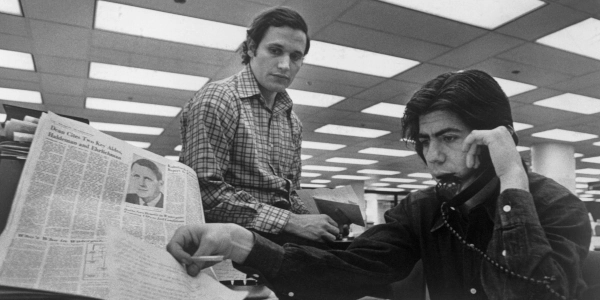
Info source: Montage (left) Presidential Portrant of President Richard Milhouse Nixon, 1972, White House Press Office. (right) Photo of Mark Felt, the identity of Deep Throat, who took down the President with his tips to reporters Woodward and Bernstein who first reported on the coverup, 1972/3, Federal Bureau of Investigation. Both courtesy Wikipedia Commons. Below: Woodward and Bernstein in their office, 1972/1974, author unknown. Courtesy Fityclub. Source: Library of Congress; Wikipedia Commons; Brainyquote.com; "Mark Felt the Watergate whistleblower known as Deep Throat," 2005, Wemoral.com; "I'm the Guy They Called Deep Throat," 2006, John D. O'Connor, Vanity Fair; "The Water Scandel: Timeline and Background," watergate.info; "The Complete Watergate Timeline, It Took Longer Than You Think," 2017, pbs.org.
History Photo Bomb

Bush-Cheney campaign bus on their presidential campaign through the Philadelphia suburbs in 2004.
Timeline History

Want a copy of the Timeline. Now available in easy to search digital format for your Kindle, Nook, or pdf format. Also comes in paperback, too.
Baseball History

Check out our partners at Stat Geek Baseball and
Baseballevaluation for a history of baseball with stat geeks in mind, including their books Fields of Gold, Baseball's Best Glove Work, and Baseball's Best @ 150.

Site of the former World Trade Center.
ABH Travel Tip

Much of America's best history takes in the beauty and nature of our national parks. From the first park in Yellowstone, from the coast of Maine to the shores of Hawaii Volcanoes, check out the history of the USA as made by our land.
Damage across the Gulf Coast from Mississippi to New Orleans after Hurricane Katrina.
Official Souvenirs
America's Best History

History Video
Nixon's Downfall From Tapes to Resignation
June 17, 1972 - Five former Central Intelligence Agency operatives, one a security officer for the Republican Party, get arrested at the Watergate Hotel offices of the D.N.C., attempting to plant and fix wiretaps previously placed in the building. Two days later, former Attorney General John Mitchell, denied a link to the burglary. Three days later, President Nixon reinterated in a press conference that the White House was not involved. In late September, it was unearthed that Mitchell had been running an intelligence gathering operation against Nixon's opponents financed by a secret Republican fund.
August 1, 1972 - The bank account of one of the burglars is found to contain a $25,000 cashier's check marked for the Nixon reelection campaign.
November 11, 1972 - President Nixon easily defeats Democratic candidate for President George McGovern in a landslide despite growing evidence of the scandal.
January 30, 1973 - Aides Liddy and James W. McCord, a former C.I.A. employee, are convicted of conspiracy and other charges stemming from the Watergade burglary and wiretapping. By the end of April, Nixon fires White House Counsel John Dean while other staffers H.R. Haldeman, John Ehrlichman, and Attorney General Richard Kleindienst resign.
May 18, 1973 - Nationally televised hearings into the Watergate scandal begin with Archibald Cox as Special Prosecutor.
June 3-13, 1973 - The coverup begins to unravel as John Dean admits he spoke to Nixon more than thirty-five times about the Watergate incident, a memo to Ehrlichman details the Plumbers plan to burglarize the Ellsburg psychiatrist's office, and that Nixon had tapes from White House meetings since 1971 that could reveal other evidence.
October 20, 1973 - President Nixon fires Special Prosecutor Archibald Cox, prompting the resignations of Attorney General Richardson and his Deputy Attorney. Impeachment talk sparks in Congress.
July 24, 1974 - After President Nixon refuses to turn over the tapes to the House Judiciary Committee, the Supreme Court ruled unanimously that he make them available, rejecting his plea for Executive Privilege.
July 27, 1974 - The first of three articles of impeachment, with the charge of obstruction of justice, is passed by the House Judiciary Committee. Within three days the other two charges drop; misuse of power and contempt of Congress.
August 8, 1974 - President Richard Milhous Nixon resigns from office due to the impeachment pressure, the first President to ever hand in his resignation.
W. Mark Felt Statement
"I'm the guy they used to call Deep Throat," was a statement released in a Vanity Fair article when Felt was 91 years old and in failing health. He had kept the secret for thirty-three years. Bob Woodward and Carl Bernstein substantiated the claim that Felt was Deep Throat, even though others still claim it was a variety of sources.
Info source: Montage (left) Presidential Portrant of President Richard Milhouse Nixon, 1972, White House Press Office. (right) Photo of Mark Felt, the identity of Deep Throat, who took down the President with his tips to reporters Woodward and Bernstein who first reported on the coverup, 1972/3, Federal Bureau of Investigation. Both courtesy Wikipedia Commons. Below: Woodward and Bernstein in their office, 1972/1974, author unknown. Courtesy Fityclub. Source: Library of Congress; Wikipedia Commons; Brainyquote.com; "Mark Felt the Watergate whistleblower known as Deep Throat," 2005, Wemoral.com; "I'm the Guy They Called Deep Throat," 2006, John D. O'Connor, Vanity Fair; "The Water Scandel: Timeline and Background," watergate.info; "The Complete Watergate Timeline, It Took Longer Than You Think," 2017, pbs.org.
History Photo Bomb
Bush-Cheney campaign bus on their presidential campaign through the Philadelphia suburbs in 2004.
Timeline History
Want a copy of the Timeline. Now available in easy to search digital format for your Kindle, Nook, or pdf format. Also comes in paperback, too.
Baseball History
Check out our partners at Stat Geek Baseball and
Baseballevaluation for a history of baseball with stat geeks in mind, including their books Fields of Gold, Baseball's Best Glove Work, and Baseball's Best @ 150.
Site of the former World Trade Center.
ABH Travel Tip
Much of America's best history takes in the beauty and nature of our national parks. From the first park in Yellowstone, from the coast of Maine to the shores of Hawaii Volcanoes, check out the history of the USA as made by our land.
Damage across the Gulf Coast from Mississippi to New Orleans after Hurricane Katrina.
Official Souvenirs
America's Best History