Sponsor this page for $75 per year. Your banner or text ad can fill the space above.
Click here to Sponsor the page and how to reserve your ad.
-
Timeline
Detail - 1513
April 2, 1513 - Ponce de León sights land near St. Augustine, coming ashore the next day and claiming the land for Spain. He names the land La Florida, after the Easter season Festival of Flowers.

Sighting Land, Claiming Florida for Spain
It had taken Ponce de León and his two hundred men only one month to sail from Puerto Rico to the North American continent. His preparations to get to this point had taken him much longer after his first sail with Columbus in 1493 and through the years of rising to encomendaro and governor of Puerto Rico. Gold had been found and controversies were many, particularly with the son of Columbus who made claim for the same. But now, on April 2, 1513, Ponce de León and his crew on those three ships had sighted land, not in the Bahamas as first thought, but actually on the North American continent. Were they near St. Augustine, or Daytona Beach, or Cape Canaveral is still up for debate, but the Europeans, in some bulk, were there to claim the land for Spain. One day after sighting land, Ponce de León rowed ashore. The land would be named La Florida, after the Festival of Flowers and the season of Easter.
The expedition would stay in the area for five days before setting sail again, heading south along the Florida coast. They had not found the Fountain of Youth, although today, in some force of irony, many New York and northern seniors seem to think they might have.
The Expedition Continues
The Santiago, the San Cristobal, and the Santa Maria de la Consolacion sailed south. On April 8, they hit rough currents, the Gulf Stream, around Cape Canaveral, thus the name which means Cape of Currents. They reached Biscayne Bay on May 4, and likely they found the area of Saint Lucie Inlet, Key Biscayne, Charlotte Harbor, Pine Island, and Miami Beach. The expedition explored the Tequesta Miami mound town at the mouth of the Miami River, but did not engage. The tribe moved inland upon sighting the ships.
The ships left Biscayne Bay on May 15, sailing around Key West, then turned north and explored the Gulf of Mexico west coast of Florida, reaching the territory of the Calusa tribe on May 23. Ponce de León visited Stababa, the primary Calusa town, thought to be today's Mound Key archaeological site in Estero Bay, and were not greeted well, leaving quickly after the tribe refused to trade and surrounded the Spanish ships with war canoes.
Once they approached Marco Island, there was a battle between the Spaniards and Indians. During their stay on the west coast, there were a variety of attacks between the Spanish and the Calusa. The last occurred on June 5; eighty Calusa and eleven sailors kept their distance and did not engage in a broad fight.
Ponce de León then sailed south, visiting Dry Tortugas on June 21, got lost in the currents before retracing his steps back to Puerto Rico while leaving one ship, the Santa Maria, to explore further. The remaining ships reached Puerto Rico on October 19, 1513. The Santa Maria arrived safely back as well on February 20, 1514. Even after the expedition had concluded, Juan Ponce de León still thought that La Florida was an island, like the others they had visited in the Caribbean, not a peninsula, and certainly not one that was attached to the North American continent.

Did Juan Ponce de León Ever Return?
Although the escapades of Ponce de León seem to surround the embellished story of the Fountain of Youth and his 1513 founding of La Florida for Spain, he did return to La Florida eight years later, on February 20, 1521, in an attempt to establish a colony, bringing with him two hundred men, including priests, farmers, artisans, etc, and fifty horses on two ships to the west coast. Unfortunately, that colony would fail, furiously attacked by the Calusa native population immediately while searching inland for fresh water. The explorer would get wounded in the battle with the natives, injured by a poison arrow. He was transported back to Havana, Cuba, but eventually died of his wounds. The colonists returned home as well.
Image above: Photo of statue to Juan Ponce de León at today's Fountain of Youth Archaeological Park, a possible site for his landing, 2020, Carol M. Highsmith. Courtesy Library of Congress. Photo below: Photo from postcard of Cross to Juan Ponce de León, established 1513, 1909, Harris Photo Post Card Co. Courtesy Library of Congress. Source info: https://www.hiddenhispanicheritage.com/, David Pena, Lehman College; Bullock Museum, "1511 Letter from Ponce de Leó"; christies.com; "Charting Juan Ponce de LeĂłn’s 1513 Voyage to Florida: The Calusa Indians amid Latitudes of Controversy," 2014, Jerald T. Milanich; University of South Florida; Florida Historical Society, myfloridahistory.org; thoughtco.com; Library of Congress; Wikipedia.

History Photo Bomb

Christopher Columbus, by Ridalfo Ghirlandaio, 1520. Courtesy Wikipedia Commons.
ABH Travel Tip
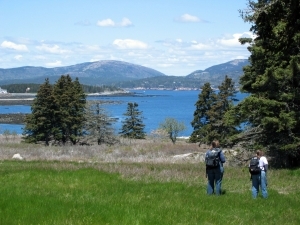
Much of America's best history takes in the beauty and nature of our national parks. From the first park in Yellowstone, from the coast of Maine to the shores of Hawaii Volcanoes, check out the history of the USA as made by our land.
The expedition would stay in the area for five days before setting sail again, heading south along the Florida coast. They had not found the Fountain of Youth, although today, in some force of irony, many New York and northern seniors seem to think they might have.
The ships left Biscayne Bay on May 15, sailing around Key West, then turned north and explored the Gulf of Mexico west coast of Florida, reaching the territory of the Calusa tribe on May 23. Ponce de León visited Stababa, the primary Calusa town, thought to be today's Mound Key archaeological site in Estero Bay, and were not greeted well, leaving quickly after the tribe refused to trade and surrounded the Spanish ships with war canoes.
Once they approached Marco Island, there was a battle between the Spaniards and Indians. During their stay on the west coast, there were a variety of attacks between the Spanish and the Calusa. The last occurred on June 5; eighty Calusa and eleven sailors kept their distance and did not engage in a broad fight.
Ponce de León then sailed south, visiting Dry Tortugas on June 21, got lost in the currents before retracing his steps back to Puerto Rico while leaving one ship, the Santa Maria, to explore further. The remaining ships reached Puerto Rico on October 19, 1513. The Santa Maria arrived safely back as well on February 20, 1514. Even after the expedition had concluded, Juan Ponce de León still thought that La Florida was an island, like the others they had visited in the Caribbean, not a peninsula, and certainly not one that was attached to the North American continent.
Image above: Photo of statue to Juan Ponce de León at today's Fountain of Youth Archaeological Park, a possible site for his landing, 2020, Carol M. Highsmith. Courtesy Library of Congress. Photo below: Photo from postcard of Cross to Juan Ponce de León, established 1513, 1909, Harris Photo Post Card Co. Courtesy Library of Congress. Source info: https://www.hiddenhispanicheritage.com/, David Pena, Lehman College; Bullock Museum, "1511 Letter from Ponce de Leó"; christies.com; "Charting Juan Ponce de LeĂłn’s 1513 Voyage to Florida: The Calusa Indians amid Latitudes of Controversy," 2014, Jerald T. Milanich; University of South Florida; Florida Historical Society, myfloridahistory.org; thoughtco.com; Library of Congress; Wikipedia.
History Photo Bomb
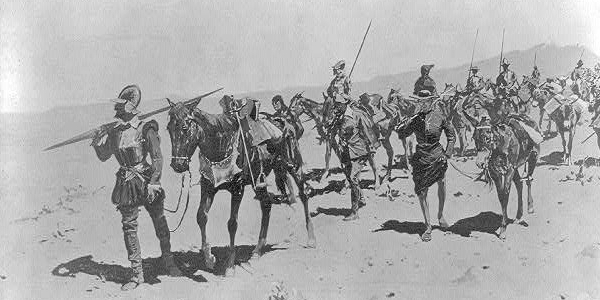

Christopher Columbus, by Ridalfo Ghirlandaio, 1520. Courtesy Wikipedia Commons.
ABH Travel Tip
Much of America's best history takes in the beauty and nature of our national parks. From the first park in Yellowstone, from the coast of Maine to the shores of Hawaii Volcanoes, check out the history of the USA as made by our land.