-
Pre-Revolution Timeline - The 1700s
Wars amongst colonial powers from Queen Anne to French and Indian led to growing unrest within the colonies themselves as taxes were levied without representation, which would lead to the next decade to come and revolution. American leaders began to emerge in a variety of ways, including George Washington trying to become a British General and Ben Franklin beginning his publishing career and flying a kite.
More 1700s

Sponsor this page. Your banner or text ad can fill the space above.
Click here to Sponsor the page and how to reserve your ad.
-
Timeline
1731 Detail
July 1, 1731 - Benjamin Franklin begins the Library Company of Philadelphia through the Junto, or Leather Apron Club, a discussion group for business interests and mutual improvement.
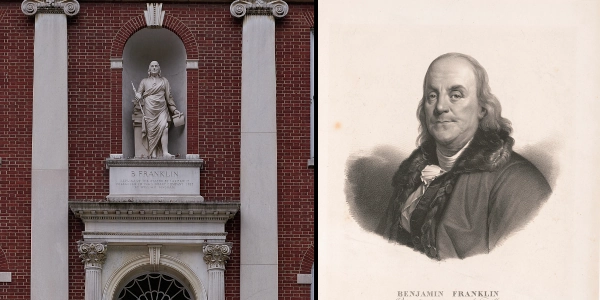
There is no doubt that the doughty man with the genius mind was creating the society he would help become the United States decades down the line. In Philadelphia, he was creating institutions, printing and the newspaper industry in the Americas, engineering copious amounts of inventions in various fields, electricity with his kite, until he became a founding father during and after the American Revolution.
One of his early foundings was the 18th century's edition of a chat room, or Linkenin, with his civic and business groups engaging in banter about how to make Philadelphia, and the colonies, better. One was called the Junto, which was Franklin's "society for mutual improvement." And this would lead to his founding of the Library Company of Philadelphia on July 1, 1731. The idea stemmed from the lack of books in the Americas and the expense of bringing those printed in England to the states. The first order of books, from London, was sent out on March 31, 1732, ordered in high part by James Logan.
Franklin was by far not the only man invested in this idea. Just read the Charter below to see men who would become icons of the American Revolution and subsequent democracy; Alexander Hamilton, Samuel Morris, John Mifflin, Thomas Bond, among many others. Their effort was to establish a library to advance literature and knowledge. It would cost each for the first fifty subscribers forty shillings. By 1741, there were seventy subscribers. Early books bought or donated revolved around historical works, geographies, and those about travel. Other categories included poems and plays, and to a lesser extent Theology.
There would be a limit of subscribers, one hundred, reached in 1763, and there would be an additional cost of ten shillings per year to be a subscriber. The first election of officers would be held on the first Monday of May, 1732. In the early days, a book could be borrowed for up to four weeks at a note for double its value.
The Library of Philadelphia was initially housed in the librarian's home, some in a handsome cabinet, but this became too small for its growing collection. About 1739, they moved into the second floor of the west wing of the State House, i.e. Independence Hall. Ironically, this was the same room Benjamin Franklin began his experiments with electricity. By 1741, there were three hundred and seventy-five books in their collection. About the same time, they purchased a plot of ground for a building of their own. It went fallow for decades. In 1772, their plea for a building on State House square was turned down. Their next move was into the newly built Carpenter's Hall second floor.
By the time of the Continental Congress and its first meeting on September 5, 1774 in Carpenter's Hall, the library became open to those members. Over the first forty years of its existence, its collection held virtually every significant work on law, history, political theory, and government in the colonies. Once the colonies became a nation, the library was open to all members of the Federal congresses through the move of the capital from Philadelphia in 1800. It was, in essence, the first unofficial Library of Congress.
Prior to getting their own building, James Logan established the Loganian Library on Sixth Street. Then on August 31, 1789, the cornerstone for their own building was laid across Fifth Street near Chestnut Street; its design by Dr. William Thornton. The building, with subsequent additions when combined with other libraries, including the Ridgeway in 1878, was opened on January 1, 1791. The Loganian Library collection was fused with that of the Library Company in 1792. A new building was constructed at Locust Street in 1880, designed by Frank Furness, and opened on February 24, 1880. The original building was sold not long after and demolished before 1890. Through 1850, the Library Company of Philadelphia had been the largest public library in the nation.
The Library Company Today
As of December 4, 2025, the Library Company of Philadelphia voted to merge with Temple University. It now holds the most important collection of important printed material in the United States of America, includuing two thousand and one hundred of Benjamin Franklin's publications, plus the collections of Benjamin Rush and James Logan, the Mayflower Compact, and maps, pamphlets, and collections from the 17th Century and the American Revolution. The collection has a total of over one half million books. Shares from the original members, passed down through the generations, still exist, as well as new members may join for $200.
The Library is open to the public from 9:00 to 4:45 Monday through Friday. It is located at 1314 Locust Street, Philadelphia, Pennsylvania 19107. There are special exhibitions in the Louis Lux-Sions and Harry Sions Galleries. Due to the fact that it is a non-circulating library, photocopies may, if they do not damage the material, be taken. Photos may also be taken.
Next door to the library, 1320 Locust Street, is the 1883 Cassatt House, which provides research rooms, accommodations for fellows, and meeting rooms. It was built and thus named for J. Gardner Cassatt.
A replica of the original Library Hall on Fifth Street was built in 1959, and is home to the American Philosophical Society.

Full Text, The Original Articles of Association of the Library Company of Philadelphia
The Charter
JOHN PENN, THOMAS PENN, and RICHARD PENN, Esquires, true
and absolute proprietaries of the province of Pennsylvania, and counties of Newcastle, Kent, and Sussex, upon Delaware, to all to whom these presents shall come, greeting: Whereas, Benjamin Franklin, Robert Grace, Anthony Nicholas, Thomas Cadwalader, William Coleman, Thomas Godfrey, Henry Pratt, Benjamin Paschall, Joseph Breintnall, John Jones, jun., Samuel Hale, William Parsons, Nicholas Cassel, Francis Richardson, William Maugridge, David Bush, Thomas Hopkinson, Philip Syng, Jacob Duché, Evan Morgan, Joseph Stretch, John Paschall, Nicholas Scull, Thomas Green, Hugh Roberts, Rees Lloyd, John Roberts, Richard Standley, John Nicholas, John Sober, Charles Read, Daniel Harrison, James Morris, Thomas shaw, John Read, Joshua Richey, James Hamilton, William Plumsted, John Bard, Samuel Morris, John Stamper, Samuel Norris, John Mifflin, John Langdale, Samuel Coates, Samuel Rhoads, Joseph King, Alexander Graydon, James Merrywether, Isaac Morris, jun., Tobias Griscom, Charles Willing, Isaac Williams, William Allen, Joseph Peters, Richard Peters, Thomas Clay, Phineas Bond, Israel Pemberton, jun., Robert Greenway, William Crosthwaite, William Callender, George Emlen, jun., Isaiah Warner, Tench Francis, James Bingham, Charles Meredith, Samuel McCall, Hugh Davy, Amos Strettell, Benjamin Shoemaker, Joseph Hatton, Andrew Hamilton, Thomas Bond, and William Peters have, at a great expense, purchased a large and valuable collection of useful books, in order to erect a library for the advancement of knowledge and literature in the city of Philadelphia; Now know ye, That we, being truly sensible of the advantage that may accrue to the people of this province by so useful an undertaking, and being willing to encourage the same, have given and granted, and by these presents do, for us, our heirs and successors, give and grant, that the said Benjamin Franklin, Robert Grace, Anthony Nicholas, Thomas Cadwalader, William Coleman, Thames Godfrey, Henry Pratt, Benjamin Paschall, Joseph Breintnall, John Jones, jun., Samuel Hale, William Parsons, Nicholas Cassel, Francis Richardson, William Maugridge, David Bush, Thomas Hopkinson, Philip Syng, Jacob Duché, Evan Morgan, Joseph Stretch, John Paschall, Nicholas Scull, Thomas Green, Hugh Roberts, Rees Lloyd, John Roberts, Richard Standley, John Nicholas, John Sober, Charles Read, Daniel Harrison, James Morris, Thomas Shaw, John Read, Joshua Richey, James Hamilton, William Plumsted, John Bard, Samuel Morris, John Stamper, Samuel Norris, John Mifflin, John Langdale, Samuel Coates, Samuel Rhoads, Joseph King, Alexander Graydon, James Merryweather, Anthony Morris, jun., Tobias Griscom, Charles Willing, Isaac
Williams, William Allen, Joseph Peters, Richard Peters, Thomas Clay, Phineas Bond, Israel Pemberton, jun., Robert Greenway, William Crosthwaite, William Callender, George Emlen, jun., Isaiah Warner, Tench Francis, James Bingham, Charles Meredith, Samuel McCall, Hugh Davy, Amos Strettell, Benjamin Shoemaker, Joseph Hatton, Andrew Hamilton, Thomas Bond, and William Peters, and such other persons as shall hereafter be admitted or become members of The Library Company of Philadelphia, according to the laws and constitutions of the said
company, hereafter to be made, be, and forever hereafter shall be, by virtue of these presents, one body corporate and politic in deed, by the name of The Library Company of Philadelphia, and them by the name of The Library Company of Philadelphia, one body politic and corporate in deed and in name, we do, for us, our heirs and successor, fully create, constitute, and confirm by these presents; and that they, by the name of The Library Company of Philadelphia they shall have perpetual succession; and that they, by the name of The Library Company od Philadelphia, be, and at all times hereafter shall be, persons able and capable in law to
have, hold, receive, and enjoy lands, tenements, rents, liberties, franchises, and hereditaments, in fee-simple, or for term of life, lives, years, or otherwise; and also goods, chattels, and other things, of what nature, kind, or quality soever. And also to give, grant, let, sell, or assign the same lands, tenements, hereditaments, goods, and chattels; and to do and execute all other thing about the same, by the name aforesaid. And also that they and their successors, by the name of The Library Company of Philadelphia, be, and shall be, forever hereafter, persons able and capable in law to sue and be sued, plead and be impleaded, answer and be answered, unto, defend and be defended, in all or any of the courts, or other places, and before any judges, justices, and other persons whatsoever, in all manner of actions, suits, complaints, pleas, causes, and matters whatsoever, and of what
nature or kind soever. And that it shall and may be lawful to
and for the said Library Company of Philadelphia, and their successors, forever hereafter, to have one common seal for their use in their affairs, and the same at their will and pleasure to change and alter.
And for the well governing and ordering the affairs
of the said oy any, we do, for us, our heirs a successors, further grant that it shall and may be lawful for the said company, and their successors, to assemble and meet together on the first Monday in May, in every year, and at such other times as there shall be occasion, at their library or some other convenient place, due and public notice being given at least twenty days before the times of such meetings, not only of the day, hour, and place of such meeting, but of the cause thereof, and of the matters to be transacted at such meeting, And that they, the said company, or one-fourth part of them at least, being so met, in person, or by proxy duly constituted in writing, shall have full power and authority, from time to time, to make, constitute, and establish such laws, statutes, orders, and constitutions as shall appear to them, or the major part of them, to be good and useful, honest and necessary, according to the best of their judgment and discretion, for the government, regulation, and direction of the Library Company, and every member thereof; and for the appointing and regulating the election or nomination of Directors, Treasurer, Librarian, Secretary, and such and so many other officers as they shall think fit; and for limiting and appointing their trust and authority; and for the admitting new members: and to do all things concerning the government, estate, goods, lands, revenues, also all the business and affairs of the said company.
All which laws, statutes, orders, and constitutions, so to be made as aforesaid, shall be binding on every member, and be from time to time inviolably observed, according to the tenor and effect of them, provided that they be not repugnant or contrary to the laws of England or this government. Provided always, That for the increase and preservation of the said library, every member of the said company shall and do pay into the hands of the said company’s Treasurer, for the time being, the sum of ten shillings, the first Monday in May, in every year, forever: and those who neglect so to do, shall pay such greater sum or sums in lieu thereof, at such times, within twelve months then next following, as by the laws of the said company shall be appointed; and that in default of these payments, every delinquent shall forfeit his share in the books and estate of the said company, and be no longer a member.
In testimony whereof we have caused the Great Seal of our said province to be hereunto affixed. Witness GEORGE THOMAS, Esq., lieutenant-governor and commander-in-chief of the said province and counties, at Philadelphia, the twenty-fifth day of March, in the fifteenth year of the reign of our sovereign lord king GEORGE the second, and in the year our LORD one thousand seven hundred and forty-two, by virtue of certain powers and authorities to him for this purpose (internalia) granted by the said proprietaries.
GEORGE THOMAS
Image above: Montage (Left) Photo of Franklin statue atop doorway of 1959 replica of Library Company of Philadelphia building, 2013, Carol M. Highsmith. (Right) Engraving of Benjamin Franklin, 1824/1860, Antoine Maurin. Both courtesy Library of Congress. Info Source: "The Original Articles of Association of the Library Company of Philadelphia," 1867, Library Company of Philadelphia; "A Short Account of the Library," 1741, Benjamin Franklin; "At the Instance of Benjamin Franklin: A Brief History of the Library Company of Philadelphia, Revised 2015; "Library Company of Philadelphia, 2017, Kenneth Finkel, Rutgers University, philadelphiaencyclopedia.org; "Library Hall, Philadelphia, Pennsylvania," 2021, Derek Strahan, lostnewengland.com; Library of Congress; Wikipedia Commons.

History Photo Bomb
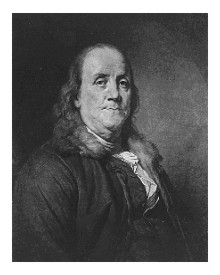
Benjamin Franklin. Image courtesy National Archives.
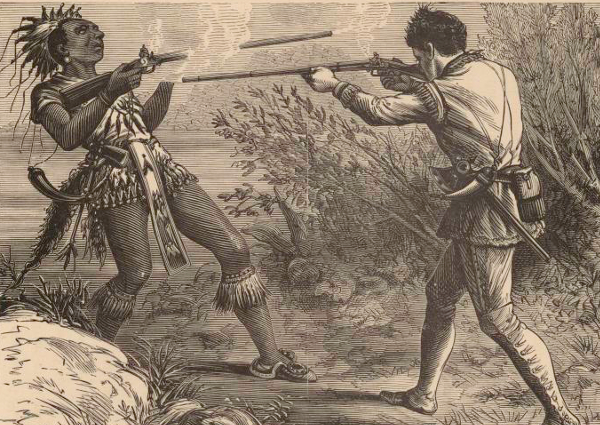
Engraving of Chamberlain and Paugus at Lovewell's Fight, Dummer's War, 1872, Author Unknown, John Gilmary Shea's A Child's History of the United States. Courtesy Wikipedia Commons.
Timeline Book


Old Fort Niagara, 1900, Detroit Photographic Company. Courtesy Library of Congress.
ABH Travel Tip
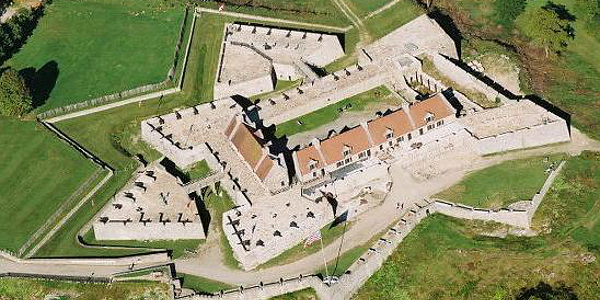
Be fort centric! Yes, if you like forts, there's plenty to go around. You can visit Fort Ticonderoga, above, in New York, or the forts of San Francisco, there's one, Fort Point, beneath the Golden Gate bridge, or anywhere in between, whether your interest is frontier, wild west, or Civil War.
There is no doubt that the doughty man with the genius mind was creating the society he would help become the United States decades down the line. In Philadelphia, he was creating institutions, printing and the newspaper industry in the Americas, engineering copious amounts of inventions in various fields, electricity with his kite, until he became a founding father during and after the American Revolution.
One of his early foundings was the 18th century's edition of a chat room, or Linkenin, with his civic and business groups engaging in banter about how to make Philadelphia, and the colonies, better. One was called the Junto, which was Franklin's "society for mutual improvement." And this would lead to his founding of the Library Company of Philadelphia on July 1, 1731. The idea stemmed from the lack of books in the Americas and the expense of bringing those printed in England to the states. The first order of books, from London, was sent out on March 31, 1732, ordered in high part by James Logan.
Franklin was by far not the only man invested in this idea. Just read the Charter below to see men who would become icons of the American Revolution and subsequent democracy; Alexander Hamilton, Samuel Morris, John Mifflin, Thomas Bond, among many others. Their effort was to establish a library to advance literature and knowledge. It would cost each for the first fifty subscribers forty shillings. By 1741, there were seventy subscribers. Early books bought or donated revolved around historical works, geographies, and those about travel. Other categories included poems and plays, and to a lesser extent Theology.
There would be a limit of subscribers, one hundred, reached in 1763, and there would be an additional cost of ten shillings per year to be a subscriber. The first election of officers would be held on the first Monday of May, 1732. In the early days, a book could be borrowed for up to four weeks at a note for double its value.
The Library of Philadelphia was initially housed in the librarian's home, some in a handsome cabinet, but this became too small for its growing collection. About 1739, they moved into the second floor of the west wing of the State House, i.e. Independence Hall. Ironically, this was the same room Benjamin Franklin began his experiments with electricity. By 1741, there were three hundred and seventy-five books in their collection. About the same time, they purchased a plot of ground for a building of their own. It went fallow for decades. In 1772, their plea for a building on State House square was turned down. Their next move was into the newly built Carpenter's Hall second floor.
By the time of the Continental Congress and its first meeting on September 5, 1774 in Carpenter's Hall, the library became open to those members. Over the first forty years of its existence, its collection held virtually every significant work on law, history, political theory, and government in the colonies. Once the colonies became a nation, the library was open to all members of the Federal congresses through the move of the capital from Philadelphia in 1800. It was, in essence, the first unofficial Library of Congress.
Prior to getting their own building, James Logan established the Loganian Library on Sixth Street. Then on August 31, 1789, the cornerstone for their own building was laid across Fifth Street near Chestnut Street; its design by Dr. William Thornton. The building, with subsequent additions when combined with other libraries, including the Ridgeway in 1878, was opened on January 1, 1791. The Loganian Library collection was fused with that of the Library Company in 1792. A new building was constructed at Locust Street in 1880, designed by Frank Furness, and opened on February 24, 1880. The original building was sold not long after and demolished before 1890. Through 1850, the Library Company of Philadelphia had been the largest public library in the nation.
The Library Company Today
As of December 4, 2025, the Library Company of Philadelphia voted to merge with Temple University. It now holds the most important collection of important printed material in the United States of America, includuing two thousand and one hundred of Benjamin Franklin's publications, plus the collections of Benjamin Rush and James Logan, the Mayflower Compact, and maps, pamphlets, and collections from the 17th Century and the American Revolution. The collection has a total of over one half million books. Shares from the original members, passed down through the generations, still exist, as well as new members may join for $200.
The Library is open to the public from 9:00 to 4:45 Monday through Friday. It is located at 1314 Locust Street, Philadelphia, Pennsylvania 19107. There are special exhibitions in the Louis Lux-Sions and Harry Sions Galleries. Due to the fact that it is a non-circulating library, photocopies may, if they do not damage the material, be taken. Photos may also be taken.
Next door to the library, 1320 Locust Street, is the 1883 Cassatt House, which provides research rooms, accommodations for fellows, and meeting rooms. It was built and thus named for J. Gardner Cassatt.
A replica of the original Library Hall on Fifth Street was built in 1959, and is home to the American Philosophical Society.
Full Text, The Original Articles of Association of the Library Company of Philadelphia
The Charter
JOHN PENN, THOMAS PENN, and RICHARD PENN, Esquires, true
and absolute proprietaries of the province of Pennsylvania, and counties of Newcastle, Kent, and Sussex, upon Delaware, to all to whom these presents shall come, greeting: Whereas, Benjamin Franklin, Robert Grace, Anthony Nicholas, Thomas Cadwalader, William Coleman, Thomas Godfrey, Henry Pratt, Benjamin Paschall, Joseph Breintnall, John Jones, jun., Samuel Hale, William Parsons, Nicholas Cassel, Francis Richardson, William Maugridge, David Bush, Thomas Hopkinson, Philip Syng, Jacob Duché, Evan Morgan, Joseph Stretch, John Paschall, Nicholas Scull, Thomas Green, Hugh Roberts, Rees Lloyd, John Roberts, Richard Standley, John Nicholas, John Sober, Charles Read, Daniel Harrison, James Morris, Thomas shaw, John Read, Joshua Richey, James Hamilton, William Plumsted, John Bard, Samuel Morris, John Stamper, Samuel Norris, John Mifflin, John Langdale, Samuel Coates, Samuel Rhoads, Joseph King, Alexander Graydon, James Merrywether, Isaac Morris, jun., Tobias Griscom, Charles Willing, Isaac Williams, William Allen, Joseph Peters, Richard Peters, Thomas Clay, Phineas Bond, Israel Pemberton, jun., Robert Greenway, William Crosthwaite, William Callender, George Emlen, jun., Isaiah Warner, Tench Francis, James Bingham, Charles Meredith, Samuel McCall, Hugh Davy, Amos Strettell, Benjamin Shoemaker, Joseph Hatton, Andrew Hamilton, Thomas Bond, and William Peters have, at a great expense, purchased a large and valuable collection of useful books, in order to erect a library for the advancement of knowledge and literature in the city of Philadelphia; Now know ye, That we, being truly sensible of the advantage that may accrue to the people of this province by so useful an undertaking, and being willing to encourage the same, have given and granted, and by these presents do, for us, our heirs and successors, give and grant, that the said Benjamin Franklin, Robert Grace, Anthony Nicholas, Thomas Cadwalader, William Coleman, Thames Godfrey, Henry Pratt, Benjamin Paschall, Joseph Breintnall, John Jones, jun., Samuel Hale, William Parsons, Nicholas Cassel, Francis Richardson, William Maugridge, David Bush, Thomas Hopkinson, Philip Syng, Jacob Duché, Evan Morgan, Joseph Stretch, John Paschall, Nicholas Scull, Thomas Green, Hugh Roberts, Rees Lloyd, John Roberts, Richard Standley, John Nicholas, John Sober, Charles Read, Daniel Harrison, James Morris, Thomas Shaw, John Read, Joshua Richey, James Hamilton, William Plumsted, John Bard, Samuel Morris, John Stamper, Samuel Norris, John Mifflin, John Langdale, Samuel Coates, Samuel Rhoads, Joseph King, Alexander Graydon, James Merryweather, Anthony Morris, jun., Tobias Griscom, Charles Willing, Isaac
Williams, William Allen, Joseph Peters, Richard Peters, Thomas Clay, Phineas Bond, Israel Pemberton, jun., Robert Greenway, William Crosthwaite, William Callender, George Emlen, jun., Isaiah Warner, Tench Francis, James Bingham, Charles Meredith, Samuel McCall, Hugh Davy, Amos Strettell, Benjamin Shoemaker, Joseph Hatton, Andrew Hamilton, Thomas Bond, and William Peters, and such other persons as shall hereafter be admitted or become members of The Library Company of Philadelphia, according to the laws and constitutions of the said
company, hereafter to be made, be, and forever hereafter shall be, by virtue of these presents, one body corporate and politic in deed, by the name of The Library Company of Philadelphia, and them by the name of The Library Company of Philadelphia, one body politic and corporate in deed and in name, we do, for us, our heirs and successor, fully create, constitute, and confirm by these presents; and that they, by the name of The Library Company of Philadelphia they shall have perpetual succession; and that they, by the name of The Library Company od Philadelphia, be, and at all times hereafter shall be, persons able and capable in law to
have, hold, receive, and enjoy lands, tenements, rents, liberties, franchises, and hereditaments, in fee-simple, or for term of life, lives, years, or otherwise; and also goods, chattels, and other things, of what nature, kind, or quality soever. And also to give, grant, let, sell, or assign the same lands, tenements, hereditaments, goods, and chattels; and to do and execute all other thing about the same, by the name aforesaid. And also that they and their successors, by the name of The Library Company of Philadelphia, be, and shall be, forever hereafter, persons able and capable in law to sue and be sued, plead and be impleaded, answer and be answered, unto, defend and be defended, in all or any of the courts, or other places, and before any judges, justices, and other persons whatsoever, in all manner of actions, suits, complaints, pleas, causes, and matters whatsoever, and of what
nature or kind soever. And that it shall and may be lawful to
and for the said Library Company of Philadelphia, and their successors, forever hereafter, to have one common seal for their use in their affairs, and the same at their will and pleasure to change and alter.
And for the well governing and ordering the affairs
of the said oy any, we do, for us, our heirs a successors, further grant that it shall and may be lawful for the said company, and their successors, to assemble and meet together on the first Monday in May, in every year, and at such other times as there shall be occasion, at their library or some other convenient place, due and public notice being given at least twenty days before the times of such meetings, not only of the day, hour, and place of such meeting, but of the cause thereof, and of the matters to be transacted at such meeting, And that they, the said company, or one-fourth part of them at least, being so met, in person, or by proxy duly constituted in writing, shall have full power and authority, from time to time, to make, constitute, and establish such laws, statutes, orders, and constitutions as shall appear to them, or the major part of them, to be good and useful, honest and necessary, according to the best of their judgment and discretion, for the government, regulation, and direction of the Library Company, and every member thereof; and for the appointing and regulating the election or nomination of Directors, Treasurer, Librarian, Secretary, and such and so many other officers as they shall think fit; and for limiting and appointing their trust and authority; and for the admitting new members: and to do all things concerning the government, estate, goods, lands, revenues, also all the business and affairs of the said company.
All which laws, statutes, orders, and constitutions, so to be made as aforesaid, shall be binding on every member, and be from time to time inviolably observed, according to the tenor and effect of them, provided that they be not repugnant or contrary to the laws of England or this government. Provided always, That for the increase and preservation of the said library, every member of the said company shall and do pay into the hands of the said company’s Treasurer, for the time being, the sum of ten shillings, the first Monday in May, in every year, forever: and those who neglect so to do, shall pay such greater sum or sums in lieu thereof, at such times, within twelve months then next following, as by the laws of the said company shall be appointed; and that in default of these payments, every delinquent shall forfeit his share in the books and estate of the said company, and be no longer a member.
In testimony whereof we have caused the Great Seal of our said province to be hereunto affixed. Witness GEORGE THOMAS, Esq., lieutenant-governor and commander-in-chief of the said province and counties, at Philadelphia, the twenty-fifth day of March, in the fifteenth year of the reign of our sovereign lord king GEORGE the second, and in the year our LORD one thousand seven hundred and forty-two, by virtue of certain powers and authorities to him for this purpose (internalia) granted by the said proprietaries.
GEORGE THOMAS
Image above: Montage (Left) Photo of Franklin statue atop doorway of 1959 replica of Library Company of Philadelphia building, 2013, Carol M. Highsmith. (Right) Engraving of Benjamin Franklin, 1824/1860, Antoine Maurin. Both courtesy Library of Congress. Info Source: "The Original Articles of Association of the Library Company of Philadelphia," 1867, Library Company of Philadelphia; "A Short Account of the Library," 1741, Benjamin Franklin; "At the Instance of Benjamin Franklin: A Brief History of the Library Company of Philadelphia, Revised 2015; "Library Company of Philadelphia, 2017, Kenneth Finkel, Rutgers University, philadelphiaencyclopedia.org; "Library Hall, Philadelphia, Pennsylvania," 2021, Derek Strahan, lostnewengland.com; Library of Congress; Wikipedia Commons.
History Photo Bomb
Benjamin Franklin. Image courtesy National Archives.
Engraving of Chamberlain and Paugus at Lovewell's Fight, Dummer's War, 1872, Author Unknown, John Gilmary Shea's A Child's History of the United States. Courtesy Wikipedia Commons.
Timeline Book
Old Fort Niagara, 1900, Detroit Photographic Company. Courtesy Library of Congress.
ABH Travel Tip
Be fort centric! Yes, if you like forts, there's plenty to go around. You can visit Fort Ticonderoga, above, in New York, or the forts of San Francisco, there's one, Fort Point, beneath the Golden Gate bridge, or anywhere in between, whether your interest is frontier, wild west, or Civil War.