-
Timeline - The 1980s
Prosperity comes again and the Cold War ends. Plus there's Olympic triumphs and controversy, the personal computer age born, and a Supreme Court justice with a difference.
More 1900s
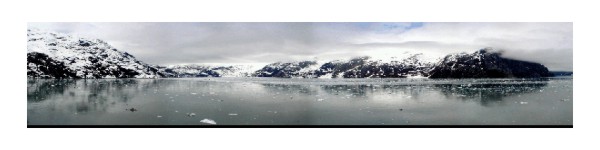
Exxon Valdez spill in Alaskan waters raises concerns about the environmental impacts of man-made disasters on our natural lands and waters.
Click here to Sponsor the page and how to reserve your ad.
-
Timeline
1989 - Detail
November 9, 1989 - The Berlin Wall, after thirty-eight years of restricting traffic between the East and West German sides of the city, begins to crumble when German citizens are allowed to travel freely between East and West Germany for the first time. One day later, the influx of crowds around and onto the wall begin to dismantle it, thus ending its existence.

Jason Donovan, Author.
On a cold evening, with drizzle coming down in early November 1989, an event that
would change the world’s status quo of the previous four decades, the Cold War
forever. After years of heavy-handed oppression, economic stagnation, existing in
constant fear of the secret police, and many other Orwellian measures the state
implemented as a way to control their citizens, an ill-prepared spokesman would turn
bottled-up emotion into action. The actions of this evening would see, while the world
watched, the Berlin Wall, a symbol of communist rule, come toppling down, changing
the world as we knew it.
As the war in Europe drew to a close, the Yalta Conference was held in Yalta,
Crimea, Ukrainian Soviet Socialist Republic, between the allied leaders. The main goal
was to set up a post-war framework for Europe. Arguably, the main thing that came out
of this gathering was the partition of post-war Germany. The agreement reached
partitioned Germany into four occupation zones. This is the blueprint that the division
of Berlin would follow. Four zones of occupation were set up as follows: the Western
allies, including France, received the western two-thirds of Germany while the Soviet
Union received the eastern third. On 23 May 1949, the Western allies would consolidate
their sectors into the Federal Republic of Germany (FRG). The soviet sector would
become, as of the 7th of October 1949, the German Democratic Republic (GDR). The
frontlines of the Cold War were soon to be set in concrete.
Why Was The Wall Built
It is essential to understand that Berlin was in a very precarious and
simultaneously advantageous position geographically. The situation was precarious for
the West but advantageous to East Berliners looking to escape to the West. Berlin was
located deep inside the GDR. With only one highway, the autobahn in German, in and
out from West Germany to West Berlin. East German and Soviet forces strictly
controlled movement along this highway. This control of movement was a small
example of the overall control that the state exerted on its citizens. The Soviets were the
ones who were ultimately in control, ruling with an iron fist.
The wall was built for many reasons, but the main reason for its construction was
to halt the number of East German citizens crossing into West Berlin. Some of the types
of people that were crossing and some of the reasons why they crossed were laid out in
a declassified CIA report from The Office Of Current Intelligence dated 10 August 1961
entitled “The East German Refugees.” The document states, "West Germany has
registered more than 2,600,000 refugees who have crossed since 1949. This figure grows
to exceed 3.5 million since the end of the war. When the numbers are broken down, they
reveal a grim future for East Germany. The document states that out of the above
numbers, 50% of those that registered were under the age of 25, and a further 25% were
between the age of 25-45. The GDR admitted that during the decade ending in 1959, more than 2.2 million people crossed into the West. The flow of refugees to the West
increased in 1960 as the East German government was implementing its farm
collectivization efforts.
The numbers reveal that the East was facing an epic “brain drain” that would
have lasting effects on their citizenry. When broken down by profession, the refugee
flow statistics from 1954-1960 show a bleak future for the German Democratic Republic.
The statistics for these six years show the following professions crossed from East to
West:
4,334 Doctors and Dentists
15,536 Engineers and Technicians
738 Professors
15,885 Other Teaching Professionals
Over 11,700 Other College Graduates
The above numbers do not include the noteworthy number of industrial
managers also crossed. This loss of professionals would handicap the East’s ability to
provide medical care to its citizens, and the loss of educators would cause education
standards in the East to be considerably lower than those in the West. The salt in the
wound was that many refugees were long-standing members of the ruling Socialist
Unity Party (SED).
Why Did The Wall Fall
There were many reasons why the large amount of refugees crossed into the
west. One reason for leaving East Germany was that the state was a communist
totalitarian state. An East German citizen had to be constantly careful of what they said
and did due to the feared state police service, known as the Stasi. The Stasi had
infiltrated all levels of society. It is said that everyone worked for the Stasi. Being
constantly on one’s guard has to be stressful and created a level of perpetual fear and
paranoia of one day being picked up by the Stasi to disappear into the state apparatus.
On top of this, there was the fact that living standards in the East were much lower than
in the West due to the government implementing a military-first economy. Because of
this choice, there were continuous food and goods shortages, with long lines and many
in those lines being turned away empty-handed. Sadly, this economic and social
situation was not unique to East Germany but was part of daily life throughout the
Soviet Union. There was also the fact that it was soviet policy to bar the children of
some white-collar workers from higher education due to their “bourgeois” background.
There was also growing discontent with the government’s inability to follow through
on their promises. The CIA stated that officials based in Berlin were aware that even officials in East Germany knew that the forthcoming restructuring of the economy was
unlikely to help solve any of the problems facing the East German state.
The brutality of the state in the Soviet Union was omnipresent in the day-to-day
lives of the citizens of the USSR. The Soviet state was well known for its brutal
crackdown on political dissent of any kind. An example of this would most certainly be
the Hungarian Revolution of 1956. The revolution was during Nikita Khrushchev’s
‘de-Stalinization reforms”. There was much hope for change at this time. The revolution
started on 23 October throughout the country. Prime Minister Imre Naguy sought to
implement economic, social, and political reforms. He went even further when he
advised the world that Hungary would reject the Warsaw Pact and began reaching out
to the United Nations in order to establish Hungarian neutrality. In fear of looking
weak, Moscow decided that these actions constituted a threat to the union as a whole,
so they decided to make an example out of the Hungarians. On 4 November, ground
forces of the Warsaw Pact, East German, Polish, Bulgarian, and Soviet forces invaded
Hungarian territory. After the invasion, the prime minister was arrested and, after
negotiations, was exiled to Yugoslavia. Unfortunately, the United States’s main
contribution was to use the CIA-backed Radio Free Europe to tell the Hungarians that
the West was coming to their aid when, in fact, the Eisenhower administration had no
intention of risking World War Three by intervening.
Hungary was not the only time the world would see the state crush a popular act
of dissent. The other well-known example is the 1968 Prague Spring in Prague,
Czechoslovakia. The “spring” was a long time coming. Throughout the course of the
1960s, the then-communist leader Antonin Novotny was under immense pressure to
rectify the country’s dismal economic situation. Due to the soviet model of farm
collectivization, agricultural output was less than before the Second World War.
Absenteeism by factory workers was dragging down manufacturing output. In 1964, a
group of reformist party members compelled Novotny to enact economic reforms,
many advocating for a mixed economy rather than the soviet style command economy
implemented at the time. Novotny put a few reforms in place, thus prolonging the
economic spiral. On top of these economic woes, the Slovak portion of the country was
pushing him to grant them more governmental independence, and when he could
not meet their demands, the Slovak leaders turned against him. This left him in a
weak position, and all it would take was a student uprising and his loss of Soviet
support to bring Novotny down; he would resign as first secretary in January 1968.
With Moscow’s backing, Alexander Dubcek was elected as Novotny’s chosen
successor. Dubcek was a “compromise candidate” and expected just to sit there. Instead,
he implemented sweeping economic and political reforms. These reforms included “the
democratization” of public life, going as far as revising the constitution to include civil
rights, including freedom of speech and freedom of the press.
The problem for Dubcek was that the Kremlin was run by hardliners of the old
guard. This old guard first pressured Dubcek to change his course and fall back in line.
Even after face-to-face meetings with soviet officials, Dubcek stayed the course; time
was running out. The Soviets advised Dubcek that “…his country was on the verge of
counterrevolutionary activities.” Time ran out on 20 August 1968. The Soviets, with the
aid of other Warsaw Pact partners, invaded Czechoslovakia with tanks that rolled down
the streets of Prague as citizens did their best to passively resist the invasion. Dubcek
was replaced by Gustav Husak. Husak reversed all of the reforms that had been put in
place. Dubcek continued his political career until 1970, when he was stripped of his
party membership. The Prague Spring had withered under the Soviet's iron grip, but
the yearning for the sweet taste of freedom would remain.
As the years went by, the communist bloc countries fell into a deep “economic
stagnation.” Part of the reason for this was the planned economy. With a planned
economy, there is no incentive to show up for work. Another issue was the reality of the
way the economy of the 70’s and 80’s developed. In reality, the soviet system had
become a three-tiered economy. The division was as follows: the economy the
government implemented, the barter system, and the black market. The need for the
last two was the military first aspect of the planned economy. This was needed to fund
the soviet side of the Cold War. What this meant in practice was that there was a chronic
shortage of goods. From food to consumer goods, there were long lines for food, and for
example, there were years-long waiting lists for apartments and cars.
On the other hand, things were different for those who were able to work outside
the Eastern Bloc. Due to a lack of foreign currency, the Soviets set up special shops
where these lucky few could shop. These few were the envy of others because these
stores stocked higher quality items as well as items that were not available to the
average citizen. The reality of the actual economic system was to create, in many ways,
a class system, which arguably hurt the people’s confidence in the classless system they
were told they were in.
By the beginning of the 1980s, the clock was ticking. The end of the USSR was
only a decade away. First, there was the election of President Ronald Reagan. One of his
primary goals was to put pressure on the Soviets by drastically increasing military
spending in an effort to outspend them. This stance was in line with his more hawkish
stance toward the USSR. Reagan also ended the period of “detente,” or coexistence,
followed by the Carter administration. The policy change had significant effects on the
Soviets. They were basically fighting a two-front war. The Cold War and a very hot war
in the Soviet-Afghan War.
It has been said that Afghanistan is a place where empires go to die. This would
be no different for the Soviets. In 1979, the Soviets invaded Afghanistan in order to prop
up a communist government that was fighting an Islamist insurgent force named the
mujahideen. This “operation” was to last weeks, but it would drag on for all but a decade. One of the main reasons the war went so bad for the invaders was the CIA’s
involvement in supplying the mujahideen with weapons and money. The Reagan
administration knew a proxy war when they saw one. The CIA would spend millions
by supplying the mujahideen with weapons and training. The soviet cost of the
invasion was in the range of $2-$3 billion per year, stretching the government's finances
even more.
While the Afghan war strained the state coffers, the economy was on thin ice. As
a result of the economic issue discussed above, the USSR continually ran a trade deficit,
and a large part of those imports were grain shipments. These imports were paid, in
large part, from proceeds from oil and gas sales. While not ideal, this arrangement was
manageable as long as prices made the trade profitable. The problem hit in 1980-1981.
As they fought for market share in the late 1970s, overproduction from oil-producing
countries had the unintended consequence of causing the 1980 “Oil Glut”—the oil glut
caused the price of oil to collapse. The price went from above $35 ($132.91 in 2024
dollars) a barrel in April 1980 to “just above $10 ($37.97 in 2024 dollars) in 1986. What
was thought to be a momentary price slump turned into a protracted six-year
bottoming out of the price of oil. With the drastic drying up of revenue, the central
government could no longer afford the cost of sufficient grain imports. Even producing
coal became less profitable for the USSR. For instance, the amount of coal it took to
produce $1,000 in income for the state in 1970 was .71 tons. By 1987, that figure had
risen to .81 tons per $1,000. The rise in the cost of energy hit the USSR harder than in the
West.
As a consequence of the way, the Soviets prioritized industrial energy use over
consumer needs. In the split of energy consumption in the USSR, 15% of the country’s
energy use was residential, and 50% was used for industrial needs. What this means is
that unlike the West, where the consumption distribution was based on residential use,
as the price of energy climbed higher, the Soviets could not cut consumption rates as the
West could relatively easily do so.

Beginning of the Fall- Gorbachev’s Reforms
Arguably, the beginning of the end came with the election of Mikhail Gorbachev
as General Secretary of the Communist Party of the Soviet Union in 1985. Gorbachev
saw that his country desperately needed a political and economic overhaul. In order to
achieve this, he introduced a series of reforms, mainly Perestroika and Glasnost.
Perestroika (restructuring) was a program aimed at restructuring the soviet economy,
mainly by decentralizing the economy from government control and supporting state-
owned “enterprises” while they progressed with their transformation to a for-profit
model. The main goal of this reform was to have an economy that is on a level playing
field with the West, mainly the United States.
The second major reform Gorbachev instituted was Glasnost (openness).
Glasnost was a program of reforms aimed at foundational change of the political
system. This program allowed freedom of speech, resulting in a noticeable rise in
criticizing the government; this was unthinkable before. The reform also allowed
candidates not chosen by the communist party to run in elections, thus weakening the
communist party's power and influence. The press was not free but “freer” to report on
the country's problems.
The Road to the Fall- Consequences Of Reform
On 11 September 1989, the Hungarians “Tore A Hole In The Iron Curtain”. The
Hungarian government liberalized their travel restrictions by removing their border
fortifications along the border with Austria. This decision ripped a hole in the 1,400 km
(roughly 870 miles) long inter-German border that stretched from the Baltic Sea to
Czechoslovakia. With the dismantling of Hungary’s fortifications, people from East
Germany and other Eastern bloc countries who were able to get permission to travel
would go to Hungary on a vacation, make their way to Budapest, and apply for refugee
status or asylum at the West German embassy. So many people flooded into the country
that camps were set up so the refugees could have a place to go while they waited for
their visas.
The Hungarian's actions came late in 1989, but there were other events during
1989 that led to the wall coming down. There were the contested elections of 7 May,
where the opposition said that the actual amount of votes cast that answered no to the
country’s communist leaders was not shown in official government results. Also, there
was the “Pan-European Picnic” held by the opposition parties “near the Austrian
border” on 19 August, facilitating escapes to the west. On 4 November, during the
weekly Monday demonstration marches held in Leipzig aiming “for freedom of
assembly and travel”… Five days before the wall came down “500,000 people gathered
in East Berlin’s central Alexanderplatz for the country’s largest pro-democracy
protest.”
Life in East Berlin was, potentially, more maddening in some ways than other
places around the country. This difference would have been the role television played
in the growing discontent. Even though watching Western television was illegal, East
Berliners regularly broke the law. They were able to tune into West German broadcasts.
Imagine going through all the hardships of life in East Berlin, and the images of fully
stocked grocery stores, cars, and better housing, to name a few, were being beamed into
your home. The feelings these images stirred within the people seeing them contributed
to the envious dissatisfaction.
On the other hand, television can also be a vehicle for change. The East Berliners also
watched, in October, as the “Monday March" in Leipzig on the 9th did not go the way the totalitarian East German government expected it to. The plan was to have a
“Tiananmen Square-style crackdown.” In reality, when faced with a crowd of over
100,000 people, the security forces backed down. This incident was filmed and
smuggled to West German press outlets. This incident left many people emboldened;
change was in the air.
The Berlin Wall Falls- The Revolution Will Be Televised
On the night of 9 November, Gunther Schabowski, a high-ranking member of the
East German Politburo was only supposed to announce a new travel law that was
meant to look positive for the press. Instead, when asked when these new measures would
take effect, he said immediately. It has been said that this was a misunderstanding or
that Mr. Schabowski did not read the full briefing before the presser started. Either way,
these words were televised around the world, but most importantly to East Berlin. The
news sent east Berliners out into the streets to confront the border guards stationed at
their regular checkpoints. There were tense moments that could have turned deadly but
outnumbered, and with no direction from the government, many guards just lifted the
gates and let the people pass. These gates did not just free waves of people but also a
tsunami of decades of bottled-up emotions. In an instant, the fear, frustration, and anger
had turned to joy and happiness as people took hammers, chisels, pickaxes, and
whatever they could lay their hands on to make their emotions manifest. The wall had
fallen.
In the end, Reagan’s “Mr. Gorbachev, tear down this wall”… comment was
fulfilled, but not by Mr. Gorbachev. His citizens beat him to it. The relationship that
Gorbachev and Reagan had allowed them to talk to one another. There are accounts that
their first meeting went at least twice as long as it was supposed to, but it also laid the
groundwork for a good working relationship between the two world leaders.
A Dark, Sad History- Deaths At The Wall
With all the excitement of that night, there was one thing that showed the lengths the
East German government was willing to go to keep their citizens from leaving through
one of the only borders where the guns face inward more than outward. The death toll
at the wall ranges anywhere from 250 all the way up to 1,100 deaths. The larger end of
the range includes East German guards who died, as well as the escapees who did not
make it. The East German guards died by escapes, their fellow guards, and some
committed suicide rather than open fire on another human being.
In the end, the Berlin Wall became a symbol of oppression, death, pain, and part
of the giant scar across the heart of Germany. In 1961, as the wall was built, the
leadership of the Soviet Union and secondarily that of East Germany could not have foreseen that the wall would end up being the linchpin that, once it failed, would bring
down the whole empire. This laid bare the decaying calcification of the government that
was ravaging the entirety of the body politic of the socialist superpower. The world
order was turned on its head and has led us to today's world. Today, parts of the wall
remain as a memorial to those who died and as a reminder of a painful chapter in not
just German history but world history as a whole. We can not forget.
Photo above: Photo of the Berlin Wall, 1986, John Zukowsky. Courtesy Library of Congress. Photo below: Map Of Soviet Union and Allied Countries, Unknown date and author. Courtesy Pinterest.
Info source: Klein, Christopher. “How the ‘Big Three’ Teed Up the Cold War at the 1945 Yalta
Conference.” history.com 2010; Weather Conditions For Berlin For 9 Nov 1989, Extreme Weather Watch; Editors of the Encyclopedia Britannica, “Mikhail Gorbachev", “Potsdam Conference”; Irvine, Amy. “What Were The Key Causes Of The Collapse Of Communism”,historyhit.com 16 Nov 2020; Tuohy, William “Hungary Allows Exodus to West by East Germans” LA Times 11 Sept. 1989; J. Llewellyn & S. Thompson, “Stagnation in the Soviet Union”, Alpha History; “The Soviet Bloc Financial Problem as a Source of Western Influence (U)” National Intelligence Council Memorandum, Directorate of Intelligence 8 Apr. 1982; Scally, Derek“East German Stasi Archive Goes Online” 10 Jan 2015.
“Central Committee”,The Editors of Encyclopedia Britannica britanica.com; “The Warsaw Treaty Organization, 1955” Department Of State Office Of The Historian”, “East Germany”, “West Germany”; “Armenia” The World Factbook; “Bulgaria” The World Factbook; Moorhouse, Dan, “Soviet Satellite States schoolhistory.org.uk; “The Yalta Conference, 1945” https://history.state.gov/milestones/1937-1945/yalta-conf; Florian-Michael Bortfeldt, “Border Memories”;
Ruffley, David L. “Ruffley on Kozlov” Book Review, Social History Portal; "Memorandum For The Record-Dollar Cost Of Soviet Military Operations In Afghanistan” 12 June 1981 cia.gov; Timofeychev, Alexey. “3 major reasons that caused the collapse of the USSR” 21 Dec. 2018, Russia Beyond; Reynolds, Douglas B, “Peak Oil and the Fall of the Soviet Union: Lessons on the 20th Anniversary of the Collapse" The Oil Drum; “The Economy of the Soviet Union” Economics Explained Channel YouTube; “How Oil Ate The Soviet Economy” Asianometry Channel YouTube; www.apnews.com “Timeline of events that led to the fall of the Berlin Wall” 6 Nov. 2019; “The End Of WWII And The Division Of Europe”; Center For European Studies; The Editors of Encyclopaedia Britannica, "The era of Partition” Britannica.com; “Yalta Potsdam” Siddharth Rajendran; “Life Behind The Berlin Wall-Full Video” izzit EDU; YouTube Channel
Mcloone, Andy “Transit West Berlin - Across the Iron Curtain in the 1980’s” YouTube; “Memorandum The East German Refugee Flow”. Central Intelligence Agency: Office Of Current Intelligence 10 August 1961; “Hungarian Revolution”, The Editors Of Encyclopedia Britannica; “More Than 1,100 Berlin Wall Victims” Panduru, Madalina “History Of Prague” Scribd.com; Bennett, Gill. Soviet Forces Invade Czechoslovakia 20 to 21 August 1968”; History of Government Blog; “De-Stalination”; “August 21, 1968: The Soviet-Led Invasion Of Czechoslovakia”, Radio Free Europe/Radio Liberty; “1968: How The Soviet Union Crushed The Prague Spring”, Radio Free Europe/Radio Liberty; Video Bradley, John F.N. Hauner, Milan. “Prague Spring” britannica.com; “7 Things you didn’t know about the Soviet war in Afghanistan” Russia Beyond; Ristanovic, Anja. “Oil Market Crashes In History: Oil & Energy Online; Taylor, Alan “The Soviet War in Afghanistan, 1979-1989”. The Atlantic. 4 Aug. 2014. Buff,Margot & Oliynyk, Kateryna. “September 11, 1989: When Hungary Tore A Hole In The Iron Curtain”. RadioFreeEurope/RadioLiberty; Schmemann, Serge. “Hungary Allows 7,000 East Germans To Emigrate West”; The New York Times. 11 Sept. 1989 Sec. A Pg.1; “Before and After Photos of Germany’s East-West Boarder”. Spiegel International; Britannica, The Editors of Encyclopaedia Britannica. "perestroika" 28 Sep. 2024, "glasnost" 15 Oct. 2024.

History Photo Bomb

Sally Ride, America's first woman astronaut, communities with
NASA from the flight deck of the Challenger Space Shuttle, June 18-24, 1983. Photo: U.S. Information Agency.
Timeline History

Now in easy to search digital format for your Kindle, Nook,
or pdf format. Also comes in paperback, too.

President Reagan at the Berlin Wall. Courtesy National Archives.
ABH Travel Tip

Take a trip along the Appalachian Trail. There are a myriad of National Park and other historic sites either on the trail or just nearby. From Acadia National Park in Maine to Harper's Ferry National Park in West Virginia, plus other Civil War sites nearby, down to Georgia. So you can take a hike, visit some history, and see a whole lot a nature and beauty along the way.

Crowds of the Civil Rights March in Washington, D.C. surround
the Washington Monument. August 28, 1963. Courtesy National Archives.