Sponsor this page. Your banner or text ad can fill the space above.
Click here to Sponsor the page and how to reserve your ad.
-
Timeline
1611 Detail
May 19, 1611 - Sir Thomas Dale arrives at Jamestown to be the new Deputy Governor and shortly after decides to build another settlement, with fort, in a safer location. It was called Henricus.
The Virginia Colony of London was expanding its presence outside the first settlement at Jamestown despite their struggles since the first landing in 1607, the Starving Time, and brushes with the Powhatan Confederacy where Pocahontas had saved John Smith's life. Sir Thomas Dale arrived on May 19, 1611, and thought that the area where Jamestown was located was terrible. It was wet, mosquito driven, and not that defensible. Within a few months, he would take about three hundred soldiers sixty miles up the James River, near its confluence with the Appomattox River, and build a fortified settlement on a bluff, thinking it could possibly even be the colony seat. The journey north had a few skirmishes with part of the Powhatan tribe led by "jack of the feathers," but the English made it to Henricus despite the warfare. It grew to contain many buildings and had all of the amenities. A large church, houses, a parsonage, and high wooden walls. There was even going to be a college built on ten thousand acres outside the fort in 1619. The interior of the fort was seven acres in size. Across the river, a hospital was built for eighty patients named Mount Malady.
Nearby Samuel Argall, fresh from his voyages to disuage the French from encroaching English territory in New England, had captured Pocahontas, now sixteen years of age, and given her to Reverend Alexander Whitaker in 1613 to be civilized, Anglosized, and Baptised. Her new name would be Rebecca. There is debate on whether she had actually been captured. Some state that she had come of her own volition and that the Powhatan no longer wanted her. The Natives Americans closest to Henricus were from the Arrohateck and Appamatuck tribes.
As she spent time at the minister's house outside the fort and at functions inside, she met John Rolfe, likely introduced to her by Reverend Whitaker. He was a settler of means who began to cultivate tobacco on the thousands of acres that surrounded the area of Henricus. This life was mimicked by other settlers. When Rebecca married John Rolfe, with the blessing of her father, Wahunsenaca, on April 5, 1614, it brought peace between the Powhatan and their affiliated tribes, which included up to thirty thousand people, and the English settlers for eight years. It gave those settlers outside the fort a calm to proceed with their lives, gain fortune, and all with positive relations and trade with their Native American neighbors.
John Rolfe took the land of his dowlry, eight hundred to one thousand acres, and began to cultivate tobacco, the first for commercial purposes, using a Spanish blend of seeds. Their son Thomas was born in 1615. In 1616, the Rolfe's made their historic trip to England to promote the colony of Virginia to future settlers, where they, or more accurately Pocahontas, were treated as royalty. It was their intention to move back to Virginia, however she died in 1617 before they could make the voyage.
Massacre of 1622
However, when the chiefdom of the Powhatan was transferred from the father of Pocahontas to a more warrior oriented man named Opechancanough, the brother of the father of Pocahontas, he had nothing but animous for the English who were pushing further and further into Powhatan territory. With her father gone and Rebecca dead as of 1617, the peace time was coming to an end. The Powhatan developed a plan for a coordinated attack stretching over seventy miles. On March 22, 1622, he and thousands of warriors attacked every outer settlement away from Jamestown, and killed over three hundred of the twelve hundred settlers there. Henricus, no longer as fortified with soldiers due to the time of peace, was destroyed, as was the college. The governor ordered all settlers toward Jamestown and the area of the three other settlements were basically vacant for two years. The war lasted for ten years; Henricus was never rebuilt.
Captain William Farrar would bring forty people back to the area later in 1622; they would become prosperous farmers on what was known as Farrar's Island. The Virginia Colony of London lost its charter, and Virginia became a crown colony.
Minute Walk in History
Henricus Fort
Listen to the park guides give a spectacular account of the third settlement spawned from Jamestown within the Virginia colony, its connection with Pocahontas accepting English religion and marrying John Rolfe, followed by its destruction. The park south of Richmond includes reconstructed buildings on the site of the original settlement, and even includes history from Civil War battles along the James River.

Area of Henricus During the Civil War
For the first three years of the Civil War, the area around Henricus saw no action, but in June of 1864, Union General Benjamin Butler would launch the Bermuda Hundred campaign with his Army of the James, attempting to attack Richmond. He would start to build the Dutch Gap Canal, a short waterway that would cut out the bend in the James River below the area of the Henricus fort. Although it was completed, yet never used by the Union Navy, the effort cost the lives of fifty men with two hundred wounded as Confederate artillery and gunboats barraged the workers.
On January 24-25, 1865, the Battle of Trent's Reach occurred below the Henricus bluff. The Confederate James River Squadron attempted to make it down to City Point outside Petersburg and threaten the base and headquarters of General U.S. Grant. An all out naval battle saw the land batteries and double turreted USS Onondaga turn back the effort of the Confederate ironclads and forced them to retreat.
Henricus Today
Today, the fortified settlement of Henricus has been reconstructed on the site of the original town, as well as the Powhatan town of Arrohateck. It has been bought recently by the government of Chesterfield and Henrico County, and is open to the public daily, except some holidays, with living history interpreters. There are fourteen re-created building, as well as a Visitor Center, picnic tables, as well as walking trails below the fort that take you to Confederate Civil War earth works, as well as a sign to the Battle of Trent's Reach, all part of the Dutch Gap Conservation Area. As of November 2025, the park is free to visit, but has previously had admission fees.
The Henricus Foundation had been established in 1985 to develop the colonial living history museum. They continue to host various events at the park throughout the year. It is thought that the ground here was tremendously changed during the Civil War.
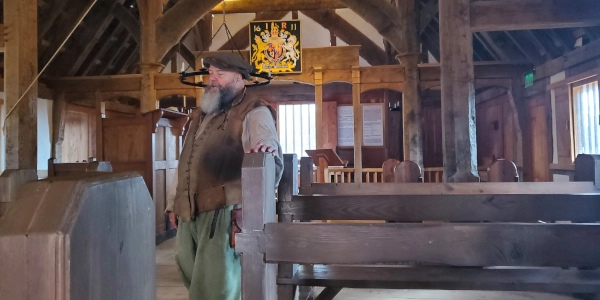
Source: Image above: Living history interpreter inside the reconstructed church at Henricus Fort, 2025, America's Best History. Image below: Buildings inside the Henricus settlement fort, 2025, America's Best History. Info source: Henricus Fort; "Henricus History," chesterfield.org; henricusfoundation; experiencechesterfield.com; Virginia Department of Historic Resources; National Park Service; Wikipedia.

History Photo Bomb

Drawing of a New Netherlands trading party, 1893, Gebbie and Company. Courtesy Library of Congress.
ABH Travel Tip
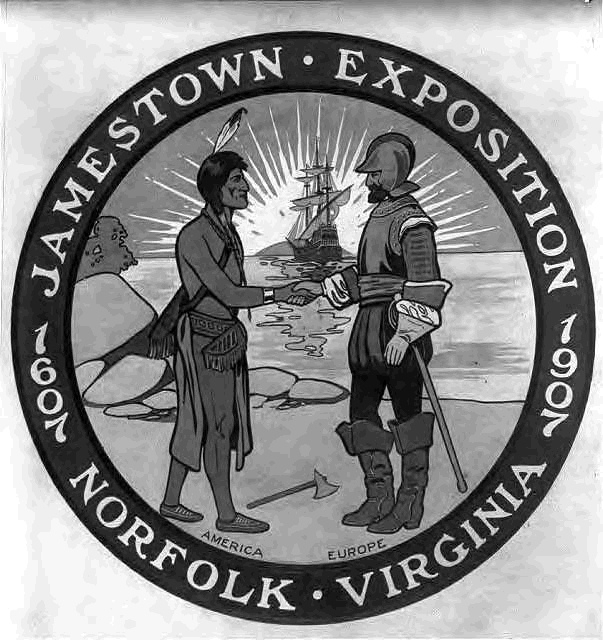
You can visit much of the Pre-Revolution history of the United States throughout the many trails and historic sites of the nation. And don't miss out on the Native American history throughout Florida or other regions. The history of the nation and North America comes from the culture of the many tribes that made up the mosaic of human culture in each state. They were here before the majority of us, after all, and their history is an amazing collection of wonder, beauty, and dedication to the land that sits beneath us.

Old Town Quebec, site of Champlain's landing and first fort in 1608, 1908. Courtesy Library of Congress.
Timeline Book

Nearby Samuel Argall, fresh from his voyages to disuage the French from encroaching English territory in New England, had captured Pocahontas, now sixteen years of age, and given her to Reverend Alexander Whitaker in 1613 to be civilized, Anglosized, and Baptised. Her new name would be Rebecca. There is debate on whether she had actually been captured. Some state that she had come of her own volition and that the Powhatan no longer wanted her. The Natives Americans closest to Henricus were from the Arrohateck and Appamatuck tribes.
As she spent time at the minister's house outside the fort and at functions inside, she met John Rolfe, likely introduced to her by Reverend Whitaker. He was a settler of means who began to cultivate tobacco on the thousands of acres that surrounded the area of Henricus. This life was mimicked by other settlers. When Rebecca married John Rolfe, with the blessing of her father, Wahunsenaca, on April 5, 1614, it brought peace between the Powhatan and their affiliated tribes, which included up to thirty thousand people, and the English settlers for eight years. It gave those settlers outside the fort a calm to proceed with their lives, gain fortune, and all with positive relations and trade with their Native American neighbors.
John Rolfe took the land of his dowlry, eight hundred to one thousand acres, and began to cultivate tobacco, the first for commercial purposes, using a Spanish blend of seeds. Their son Thomas was born in 1615. In 1616, the Rolfe's made their historic trip to England to promote the colony of Virginia to future settlers, where they, or more accurately Pocahontas, were treated as royalty. It was their intention to move back to Virginia, however she died in 1617 before they could make the voyage.
Captain William Farrar would bring forty people back to the area later in 1622; they would become prosperous farmers on what was known as Farrar's Island. The Virginia Colony of London lost its charter, and Virginia became a crown colony.
Henricus Fort
On January 24-25, 1865, the Battle of Trent's Reach occurred below the Henricus bluff. The Confederate James River Squadron attempted to make it down to City Point outside Petersburg and threaten the base and headquarters of General U.S. Grant. An all out naval battle saw the land batteries and double turreted USS Onondaga turn back the effort of the Confederate ironclads and forced them to retreat.
The Henricus Foundation had been established in 1985 to develop the colonial living history museum. They continue to host various events at the park throughout the year. It is thought that the ground here was tremendously changed during the Civil War.
Source: Image above: Living history interpreter inside the reconstructed church at Henricus Fort, 2025, America's Best History. Image below: Buildings inside the Henricus settlement fort, 2025, America's Best History. Info source: Henricus Fort; "Henricus History," chesterfield.org; henricusfoundation; experiencechesterfield.com; Virginia Department of Historic Resources; National Park Service; Wikipedia.
History Photo Bomb


Drawing of a New Netherlands trading party, 1893, Gebbie and Company. Courtesy Library of Congress.
ABH Travel Tip
You can visit much of the Pre-Revolution history of the United States throughout the many trails and historic sites of the nation. And don't miss out on the Native American history throughout Florida or other regions. The history of the nation and North America comes from the culture of the many tribes that made up the mosaic of human culture in each state. They were here before the majority of us, after all, and their history is an amazing collection of wonder, beauty, and dedication to the land that sits beneath us.
Old Town Quebec, site of Champlain's landing and first fort in 1608, 1908. Courtesy Library of Congress.
Timeline Book