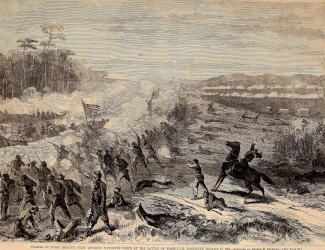
Image above: Drawing of Sumner's Corps at Battle of Nashville, date unknown, Harper's Weekly. Courtesy Wikipedia Commons.
Spotlight on Lesser Known History
Battle of Nashville, Tennessee
America's Best History Spotlight
On this page we're going to Spotlight the lesser known historic sites and attractions that dot the history landscape across the USA and are worth a visit if you're in their area. And while they may be lesser known, some are very unique, and will be that rare find. You'll be, at times, on the ground floor, or maybe even know something others don't. It'll be fun. Visit them.
Battle of Nashville, Tennessee
Yes, the two day Battle of Nashville on December 15 to 16, 1864, was an important end to the Confederate Army's effort to control Tennessee again, however, its legacy has been more forgotten due to Nashville's growth as well as the South's lack of desire to commemoriate its loss, than some of the battles that would lead up to it, i.e. the Battle of Spring Hill, November 29, and the Battle of Franklin, November 30. However, even those have been lesser interpreted than they should. Nashville, with eighty-five thousand troops; Union 55,000 under General George Thomas (Department of the Cumberland), and Confederate 30,000 under General John Bell Hood (Army of Tennessee), just from its size, deserves better. Over nine thousand men were killed, wounded, or missing. A major Union victory with double the casualties on the Confederate side, it has taken a backseat to other music oriented Nashville attractions. However, if you are a Civil War history buff, take some time on your vacation there, and wander around the history that is left.
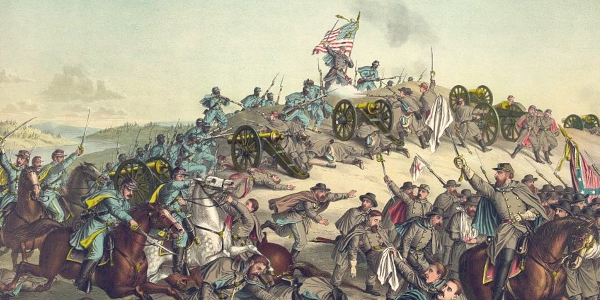
Image above: Lithograph of the Battle of Nashville, 1891, Kurz and Allison. Courtesy Library of Congress.
Sponsor this page. Your banner or text ad can fill the space above.
Click here to Sponsor the page and how to reserve your ad.
Info, What's There Now, History Nearby
Battle of Nashville, Tennessee
Very little of the battlefield remains today, overwhelmed by Nashville's expansion. For example, the American Battlefield Trust holds only three acres. Other sites that you are able to visit are small as well, but do provide glimpses into the wheres of the Battle of Nashville and its history. The Battle of Nashville Peace Monument, Shy's Hill, Fort Negley, Belmont Mansion, and a good amount of exhibits at the Tennessee State Museum provide a start. Signs and waysides, plus other museums throughout the city are on a driving tour (Nashville of Nashville Preservation Society has a great one as does battleofnashville.com) that meanders around important battlefield sites.
The Battle of Nashville is often thought to be the end of the Army of the Tennessee. It signified that the Civil War in the Western Theater was essentially over.
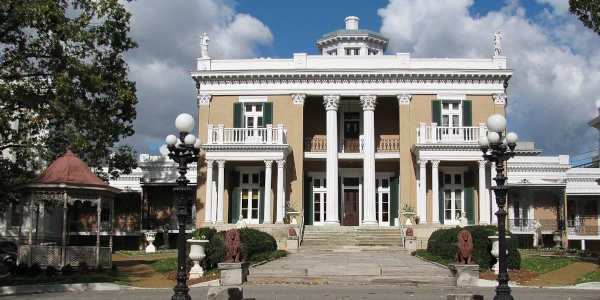
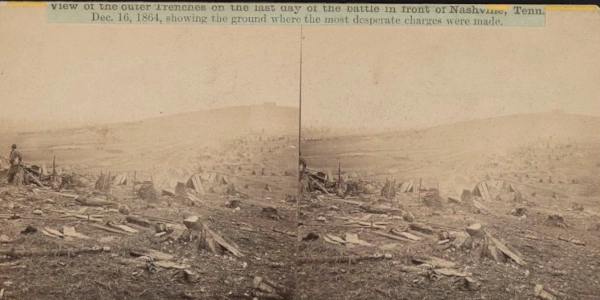
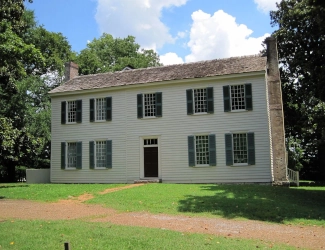
Image above: Belmont Mansion, now a Museum, headquarters of Union General Thomas, 2011. Irishjames2909. Courtesy Wikipedia Commons C.C. 3.0.. Below: View of the outer trenches on the last day of the battle in front of Nashville, December 16, 1864, where charges were made, 1864, J.P. Conley. Courtesy Library of Congress.
Where Is It
Since there is no true Visitor Center for the Battle of Nashville, the physical addresses of the remaining parks, forts, and museums are spread around the city of Nashville. We would suggest getting the Driving Tour or heading to either the Tennessee State Museum or one of the headquarter mansions to begin your journey.
What is There Now
Battle of Nashville, Tennessee
A meager amount of land associated with the battle has been saved. Museums and signs provide most of the landmarks of the battle. A stop at the Tennessee Museum and the Belmont Mansion are your best bets for orientation and a history of the battle.
When Open and How Much
Tennessee State Museum, 1000 Rosa L. Parks Boulevard, Nashville, TN 37208. Museum is free to visit and its expansive exhibits cover the story of Nashville from its inception through the Battle of Nashville (Permanent exhibition Civil War and Reconstruction) and today's Music City. It has a dining facility,
Belmont Mansion, 1700 Acklen Avenue, Nashville, TN 37212. Headquarters of Union General George Thomas. On campus of Belmont University. General Admission $18 for intro and 45 minute tour. Guided tour, $22, 75 minutes, advance purchase recommended.
Battle of Nashville Trust, 4700 Lealand Lane, Nashville, TN 37220. The website of the trust coordinates the various Battle of Nashville sites to visit and is a great site to research prior to reaching Nashville and finding the remnants of the battlefield and its story.
Fees and hours are subject to change.
Websites
Battle of Nashville Driving Tour
Tennessee State Museum
Belmont Mansion Museum
Battle of Nashville Trust
History Nearby
The history nearby is Nashville centric, plus the battles of the Civil War in Tennessee. Of course, there is a whole lot more within several hours as well, from historic homes to state historic sites.
Photos, History, and More Spotlights
The Battle
The Union Army had held Nashville since the 1862-3 battles of Fort Donelson and Stones River, but in late 1864, with Sherman marching to the sea in Georgia, the Confederates thought they would put pressure on Sherman to divert troops by redirecting the Army of the Tennessee to try and retake Tennessee. They had already lost the Battle of Spring Hill, a third battle at Murfreesboro, and the large scale battle at Battle of Franklin where multiple commanders were lost during the largest charge of the war, but they pushed forward toward Nashville with a battered force of thirty thousand men.
Confederate General John Bell Hood was headquartered at Traveler's Rest, six miles east of Nashville. On December 15, 1864, with the Union forces preparing for fourteen days with a plan to destroy Hood, General George Thomas's forces attacked the Confederate troops on the right, a diversionary attack planned by Thomas, with General Steedman's three regiments of the United States Colored Troops and one brigade of untested white soldiers. He held the position for the rest of the day. In the afternoon, Thomas sent forces to assault the Confederate left on Montgomery Hill with a giant wheel maneuver. Cavalry troops raced through Belle Meade plantation. Redoubt #1 was captured. The assaults were successful and darkness halted the battle.
General Hood and the Confederate Army were not, at this point, defeated. He positioned his defensive line two miles south at Shy's Hill and Overton Hill. During the morning of December 16, 1864, Union troops moved forward and constructed their own earthworks opposite Hood, some only two hundred and fifty yards apart. A charge by the Union up the Confederate's strong position on Overton Hill failed at first. The charge by the Israelites of General Smith however succeeded on Shy's Hill (Compton's Hill) and prompted a second assault at Overton Hill. The Union charges now did not fail, forcing Hood and the Confederate Army to skeedaddle, not stopping until they reached Tupelo, Mississippi. At the beginning of his Tennessee campaign, Hood counted 38,000 soldiers in his Army; after Nashville, it had been reduced to 15,000 to 19,000 men.
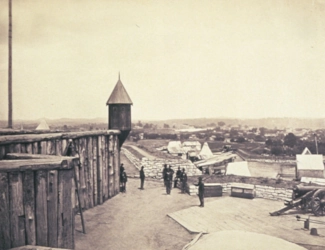
Photo above: Fort Negley during the Battle of Nashville, 1864, George Barnard. Courtesy Wikipedia Commons.
Buy Second Edition
America's Best History Timeline

Great book to keep middle school to college students up to date on their American history.
Commanders at the Battle
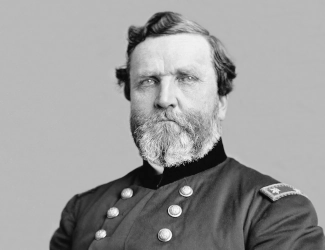
General George H. Thomas - The commander of the Union Army at the Battle of Nashville was a veteran commander. He had served in the Mexican-American War and was a Southern Unionist from Virginia. Thomas would lead or be subordinate at various early Western Theater victories, Mill Springs, Perryville, and Stones River. However, one of his greatest achievements of the Civil War occurred at the Battle of Chickamauga in the fall of 1863. That was followed up at the Battle of Chattanooga and later through the battles of 1864 during Hood's invasion of Tennessee.
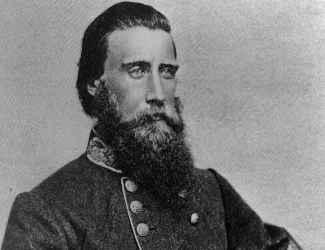
Confederate General John Bell Hood, Kentucky born, had been a student of Thomas at West Point. After his graduation, he was sent by the Federal Army to posts in California and Texas. When the Civil War broke out, he became a cavalry captain in the Confederate Army from Texas, 4th Texas Infantry Regiment. A number of notable accomplishments followed during the war, raising his profile and rank from captain to major to General. Hood was part of the attack on the Wheatfield and Round Tops that failed during the Battle of Gettysburg. He was considered impulsive, and lost many men due to his decisions. Hood, now back in the Army of Tennessee, had broken away from the siege of Atlanta in autumn 1864, which caused General Thomas to leave Sherman to March to the Sea without him. He followed Hood back to Tennessee through battles that led to the eventual demise of the Army of the Tennessee in the Battle of Nashville.
Image above: Commanding Union General George Thomas, 1855/1865, Mathew Brady. Courtesy Wikipedia Commons via Library of Congress. Below: Commanding Confederate General John Bell Hood, unknown date or author. Courtesy Wikipedia Commons.
T-Shirts and Souvenirs

America's Best History T-Shirts, Sweatshirts, Backpacks, and other Souvenirs from the official gear of americasbesthistory.com.
Battle of Nashville Sites to Visit
Traveler's Rest - Headquarters of the Confederate Army of Tennessee during the Battle of Nashville, this once over a thousand acre plantation, with eighty slaves, is now a museum with house tours, videos, and exhibits. The home was built in 1799, the oldest in Nashville.
Belle Meade Mansion and Historic Site - There is a 45 minute outdoor walking tour about the Civil War, price $32, that covers the thirty acres of the property and the skirmish held there on its front lawn. Other tours of the mansion as well on slavery and emancipation are also held there.
Fort Negley was a large masonry fort built in 1862–1863 by African-Americans under the direction of the Union. Guns commanded the fort, and are where the first shots in the battle raged. The ruins of the fort remain today, as well as a Visitor Center.
Belmont Mansion, Union headquarters, was the largest home in Nashville with thirty-six rooms, construction begun in 1850, prior to the Civil War. Originally known as Belle Monte, it has a variety of self-guided and guided tours on various topics, including the Battle of Nashville. The mansion and grounds covered one hundred and seventy-acres originally, and after the Civil War went through land development, and by 1890, two women, Miss Heron and Miss Hood, began a women's college called Belmont.
Shy's Hill, was the western flank of the Confederate Army on the night of December 15, and fought over, with Confederates surrounded, the next day in the afternoon by the division of Brigadier General John McArthur of the XVI Corps. It is now a park with flags, cannons, two monuments, and waysides on seven acres of land preserved about the Battle of Nashville of the eighteen acres of core battlefield land.
Battle of Nashville Peace Monument was originally constructed in 1927, thirty feet tall, and now reconstructed in Monument Park on battlefield land, Oscar Noel's farm, where Woods' IV Corps stormed on the first day of the battle. A witness tree still survives in the park.
Photo above: Traveller's Rest, headquarters of the Army of the Tennessee, 2013, Thomas R Machnitzki. Below: Memorial to the Battle atop Shy's Hill, 2012, JohnBruceAllyn. Both courtesy Wikipedia Commons C.C. 3.0..
February Spotlight
Battle of Moores Creek Bridge, North Carolina
April Spotlight
Fort Davis, Texas
