-
Pre-Revolution Timeline - The 1770s
The people were getting tired of the overarching rules, regulations, and taxes of the British Crown, perhaps no more so than in Boston where a massacre would occur. So a Tea Party would be held, declarations and Congresses made, then a war with shots ringing out from Princeton to Saratoga to Yorktown. But it would take much longer than this one decade to win that war and to form a true government. The American Revolution would seep into the next decade and the first President not in office til after that.
More 1700s
American Revolution Historic Sites

What's going on to protect and interpret American Revolution historic sites. Great news on two interesting fronts.
Sponsor this page. Your banner or text ad can fill the space above.
Click here to Sponsor the page and how to reserve your ad.
-
Timeline
1776 Detail
June 28, 1776 - Battle of Sullivan's Island in South Carolina sees the Patriot militia under Colonel William Moultrie defeat the naval attacks by British General Henry Clinton, forcing British troops to return to New York.
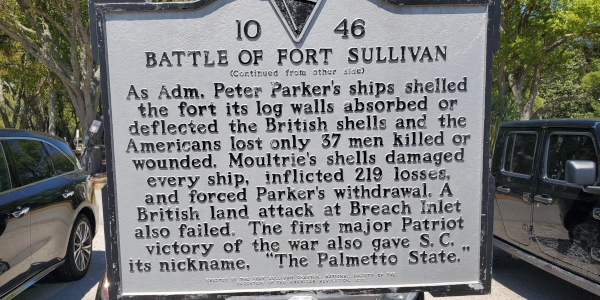
The Declaration of Independence had not yet been announced, and the British had been sent out of Boston on March 17, 1776 after a long siege by the Patriots begun the year before. The British Army would now hunker down in New York and New Jersey as they planned their next attacks. In their first major attempt to attack the Patriots in the south the month before, they had been defeated at the Battle of Moores Creek Bridge and therefore the Loyalists were prevented from meeting with British troops that were coming by sea, thus failing in their goal to start a southern front. This time, four months later, they would try again. There would be two thousand two hundred British troops under Admiral Peter Parker and General Henry Clinton in the advance. What they may not have realized is the amount of Continental Army forces that had gathered around Charleston since the Moores Creek battle; only four hundred and thirty-five at Fort Sullivan, but six thousand in other defenses in the region.
The British plan had been hatched after Moores Creek and prior to leaving Boston altogether as General Clinton sailed from the harbor in January to meet up with General Cornwallis and his seven regiments, along with Commodore Peter Parker and his eleven ships, in North Carolina near the Cape Fear River. Clinton thought that the Loyalist contingent in the Carolinas was large and that victory there would be easier than in the north. Once they arrived, they learned of the defeat at Moores Creek Bridge and debated their next move. Clinton wanted to sail to the Chesapeake. Commodore Parker chose Charleston, which Clinton acquieced to, in part due to intelligence that stated that the Patriots defense on Sullivan's Island was poor.
The Patriot Army and slaves had built a Palmetto Log fort, with two Palmetto logs sixteen feet apart and filled with clay and sand, but it was not finished. However, Fort Sullivan was tall, sixteen feet, and five hundred square feet in size. It was garrisoned by the 2nd South Carolina Regiment under William Moultrie, the 4th South Carolina Regiment, and accompanied by thirty to eighty Catawba warriors, an amalgamation that totaled eight hundred. They had but two cannons under Colonel William Thomson guarding against a mainland attack and thirty-one in the fort. When they sighted the British fleet coming into the Five-Fathom Hole on June 8, an additional contingent of two thousand soldiers under Major General Charles Lee were stationed in Charles Town itself. Lee was not impressed with Fort Sullivan nor Colonel Moultrie; he wanted the fort abandoned because he felt it would fall quickly. Moultrie and South Carolina President John Rutledge disagreed.
Fortunately for the Continentals, the British were having trouble getting their ships past the sand bar and Clinton could find no appropriate plan to get from the mainland to Sullivan's Island. However, Peter Parker was not swayed by not having the British regulars support his naval adventure. He wanted to attack under the impression that his bombardment would cause Moultrie to surrender.
Minute Walk in History
Battle of Fort Sullivan
The British were soon to be sieged out of Boston and thought deploying a Southern strategy, even back in 1776, would make better use of their forces as, they thought, more Loyalists resided in the South. So General Clinton and Commodore Parker sailed south and attacked Sullivan's Island and Fort north of Charleston on June 28, 1776. The attack did not work, and combined with the Battle of Moores Creek, kept the Royal Navy and Regulars from using that strategy again until four years later. Stirring music and photos of reenactors and the period to honor the men. America 250 southern style.
The Battle Itself
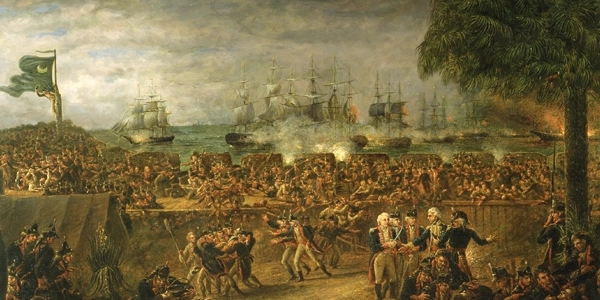
Colonel Moultrie was riding north to meet with cannoneer "Old Danger" Thomson on June 28, 1776, but heard a warning call from a lookout. There were British ships approaching. One, the bomb ketch Thunder blasted the first shot toward the Palmetto log fort. The main attack by Parker was to be accomplished by four ships; Bristol and Experiment with fifty guns apiece, and the Active and Solebay with twenty-eight cannons. Parker's assumption, led by local African American pilots, was that his men-of-war could get within seventy yards of Fort Sullivan; they could only breach the sea to five hundred yards.
It may not have mattered as the supposed weak fort with those Palmetto logs acted like a sponge, repelling the cannon shot without harming the fort. So the naval attack fizzled as the diversionary tactic by Clinton and the British infantry could not overwhelm the men guarding access from the mainland under Thomson. Toward Charleston Harbor, Parker sent three frigates forward; Actaeon, Sphinx, and Syren, with orders to enfilade the fort from the south. However, they ran aground on the Lower Middle Ground shoal, where Fort Sumter would later be built. The Actaeon could not escape the sand.
By three o'clock, Colonel Moultrie halted fire, saving his powder for a potential assault by Clinton. While waiting, the Palmetto fort continued to repel the cannon shot from the Royal Navy. Later in the afternoon, General Lee arrived and saw that Colonel Moultrie and his men on Sullivan's Island had the battle in hand. For each fifty rounds shot by the British, Fort Sullivan had only shot once.
Hope was gone by evening for the British assault. They had expended seven thousand rounds (some state up to twelve thousand), over ten hours, but to no avail, while taking on seventy shots to the Bristol alone. That one ship lost one hundred and eleven men to wounds; forty perished. In total, there were two hundred British casualties. With the tide in ebb and his ships battered, Parker ordered a withdrawal. The Actaeon, still marooned, was abandoned and set ablaze.
Charlestown, June 29th, 9 o'clock.
DEAR COL.
I should have thanked you and your brave garrison this morning, vis-a-vis at the fort ... but am prevented by a great deal of business. I do heartily thank you all and shall do you justice in my letters to congress. I have applied for some rum for your men. They deserve every comfort that can be afforded to them. We have sent for more powder, inform me of all you wants.
I am, dear Col. yours,
CHARLES LEE
The British plan had been hatched after Moores Creek and prior to leaving Boston altogether as General Clinton sailed from the harbor in January to meet up with General Cornwallis and his seven regiments, along with Commodore Peter Parker and his eleven ships, in North Carolina near the Cape Fear River. Clinton thought that the Loyalist contingent in the Carolinas was large and that victory there would be easier than in the north. Once they arrived, they learned of the defeat at Moores Creek Bridge and debated their next move. Clinton wanted to sail to the Chesapeake. Commodore Parker chose Charleston, which Clinton acquieced to, in part due to intelligence that stated that the Patriots defense on Sullivan's Island was poor.
The Patriot Army and slaves had built a Palmetto Log fort, with two Palmetto logs sixteen feet apart and filled with clay and sand, but it was not finished. However, Fort Sullivan was tall, sixteen feet, and five hundred square feet in size. It was garrisoned by the 2nd South Carolina Regiment under William Moultrie, the 4th South Carolina Regiment, and accompanied by thirty to eighty Catawba warriors, an amalgamation that totaled eight hundred. They had but two cannons under Colonel William Thomson guarding against a mainland attack and thirty-one in the fort. When they sighted the British fleet coming into the Five-Fathom Hole on June 8, an additional contingent of two thousand soldiers under Major General Charles Lee were stationed in Charles Town itself. Lee was not impressed with Fort Sullivan nor Colonel Moultrie; he wanted the fort abandoned because he felt it would fall quickly. Moultrie and South Carolina President John Rutledge disagreed.
Fortunately for the Continentals, the British were having trouble getting their ships past the sand bar and Clinton could find no appropriate plan to get from the mainland to Sullivan's Island. However, Peter Parker was not swayed by not having the British regulars support his naval adventure. He wanted to attack under the impression that his bombardment would cause Moultrie to surrender.
Minute Walk in History
Battle of Fort Sullivan
It may not have mattered as the supposed weak fort with those Palmetto logs acted like a sponge, repelling the cannon shot without harming the fort. So the naval attack fizzled as the diversionary tactic by Clinton and the British infantry could not overwhelm the men guarding access from the mainland under Thomson. Toward Charleston Harbor, Parker sent three frigates forward; Actaeon, Sphinx, and Syren, with orders to enfilade the fort from the south. However, they ran aground on the Lower Middle Ground shoal, where Fort Sumter would later be built. The Actaeon could not escape the sand.
By three o'clock, Colonel Moultrie halted fire, saving his powder for a potential assault by Clinton. While waiting, the Palmetto fort continued to repel the cannon shot from the Royal Navy. Later in the afternoon, General Lee arrived and saw that Colonel Moultrie and his men on Sullivan's Island had the battle in hand. For each fifty rounds shot by the British, Fort Sullivan had only shot once.
Hope was gone by evening for the British assault. They had expended seven thousand rounds (some state up to twelve thousand), over ten hours, but to no avail, while taking on seventy shots to the Bristol alone. That one ship lost one hundred and eleven men to wounds; forty perished. In total, there were two hundred British casualties. With the tide in ebb and his ships battered, Parker ordered a withdrawal. The Actaeon, still marooned, was abandoned and set ablaze.
Charlestown, June 29th, 9 o'clock.
DEAR COL.
I should have thanked you and your brave garrison this morning, vis-a-vis at the fort ... but am prevented by a great deal of business. I do heartily thank you all and shall do you justice in my letters to congress. I have applied for some rum for your men. They deserve every comfort that can be afforded to them. We have sent for more powder, inform me of all you wants.
I am, dear Col. yours,
CHARLES LEE
For the men under Colonel Moultrie and the hardiness of the Palmetto fort, the Palmetto still stands on the South Carolina flag as a symbol for the victory at Sullivan's Island.
Consequences of British Defeat
Morale in the Royal Navy after the battle was shattered. It was reported that the men stated that when reports made it back to England, the public and King could not believe it. There had only been twenty-six Continental soldiers wounded and eleven killed. Colonel Moultrie was a hero, eventually having the large fort which the Confederates used to bombard Sumter named after him.
However, the major consequence for the British was the fact that they would not attempt a southern strategy again for four years. When six days later, the Declaration of Independence was shouted on the streets of Philadelphia, the British knew that a major defeat at the hands of the farmers, merchants, and soldiers of the Continental Army was possible.
Image above: Wayside at today's Fort Moultrie about the Battle of Sullivan's Island which took place nearby, 2006. Courtesy America's Best History. Image below: Painting of the Battle of Sullivan's Island, 1826, John Blake White. Courtesy U.S. Senate Art Collection via Wikipedia Commons. Info Source: National Park Service; Library of Congress; Wikipedia Commons; "Battle of Sullivan's Island," Gabrielle McCoy, mountvernon.org; "Sullivan's Island," battlefields.org; "History of the Battle of Sullivan's Island," Adam, southcarolinaexplorer.com; "Memoirs of the American Revolution: so far as it related to the states of North and South Carolina, and Georgia," 1802, William Moultrie.
History Photo Bomb
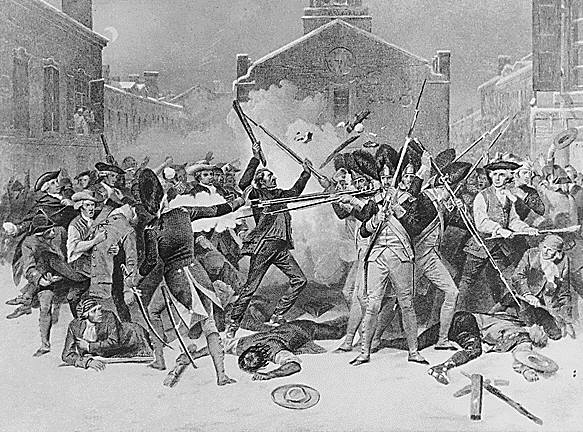
Drawing of the Boston Massacre, March 5, 1770.
ABH Travel Tip
The bargains at the National Park Service continue, despite some recent increases in park fees. The National Park Pass is now called the America the Beautiful Pass, which admits all vehicle and family visitors for one year, and costs $80 for one twelve month period. The pass covers most Federal fee areas, including National Parks, Historic Sites, and National Forests. For those of 62 years of age or older, buy the America the Beautiful Senior Pass. For only $20 per year or $80 for a lifetime pass, you gain free
entrance for the rest of your life to all National Parks, National Historic Sites, and National Forests, and other federal fee sites for you, your spouse, and your children, plus discounts of 50% on some use fees, such as camping. Must be purchased in person at a National Fee location, which are the one hundred or so National Park Service sites that charge for entry. Prices for foreign visitor are expected to rise in 2026.

Paul Revere on his ride to Concord to warn the patriots that
the British were coming. Courtesy National Archives.
Timeline Book


George Washington talking to his men outside the log huts at
his encampment in Valley Forge. Courtesy National Archives.
Military History
Check Out This Interesting
Website suggested by students at Green Mountain
Central School District in Vermont, Understanding Our Military Branches